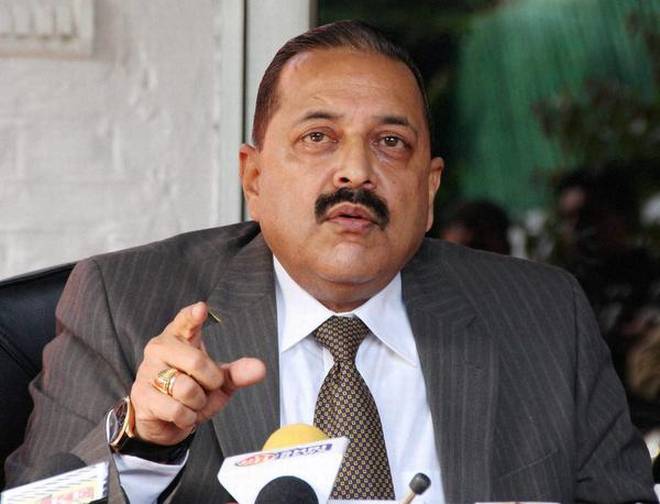
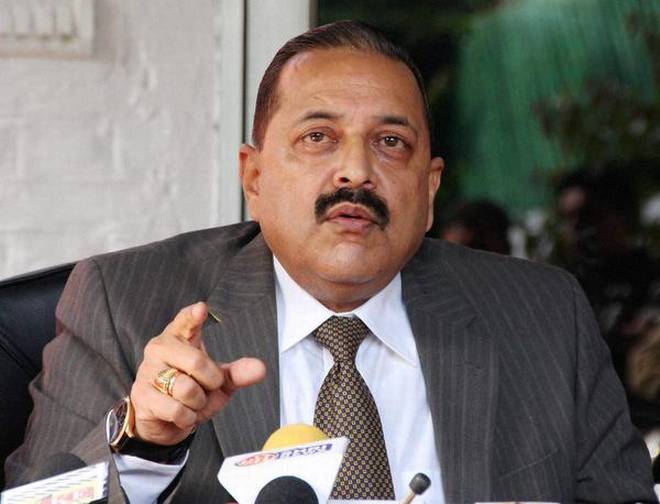
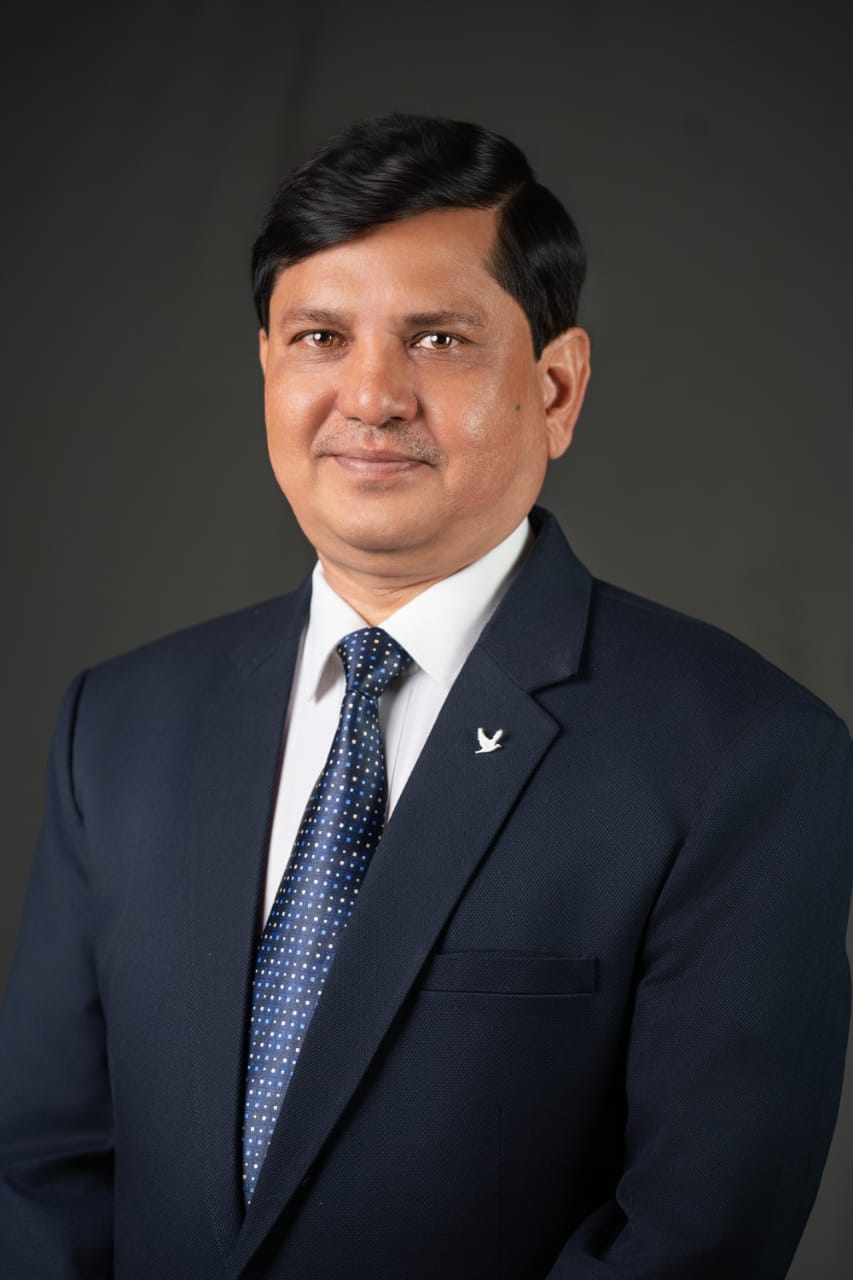
SHANTI Bill will go down in history as one of the Modi Government’s biggest science reforms, said Union Minister Science & Technology, Dr Jitendra Singh in a media interview here today.
The Minister observed that while parliamentary discourse on reforms has traditionally focused on public welfare schemes and governance measures, the long-term socio-economic character of the nation will increasingly be shaped by reforms in science and technology. The third term of Prime Minister Narendra Modi, Modi 3.0, is distinctly characterised by bold, structural reforms, with a strong emphasis on science, innovation, and entrepreneurship, he added.
SHANTI Bill represents a defining departure from convention by positioning science-driven reform at the centre of national transformation, said the Minister.
Dr. Jitendra Singh said, the Bill must be seen as one of the most significant science reforms of the Modi Government, noting that India has historically not framed scientific advancement within the reform narrative despite its decisive impact on future growth, industry, and global competitiveness.
Placing the SHANTI Bill within the larger context of Modi 3.0, Dr Jitendra Singh said the third term of Prime Minister Narendra Modi is distinctly characterised by bold, structural reforms, with a strong emphasis on science, innovation, and entrepreneurship. He highlighted that while earlier reform phases were associated with landmark political and strategic decisions, Modi 3.0 will be remembered for breaking long-standing barriers in sectors that determine India’s technological and economic future.
The Minister said that the SHANTI Bill marks a historic reform in India’s nuclear sector, unlocking its potential for peaceful, clean, and sustainable energy while maintaining uncompromising standards of safety, sovereignty, and public interest. He emphasised that such a reform was inconceivable for over six decades and became possible only due to Prime Minister Modi’s ability to dismantle legacy taboos and align India’s policies with global best practices.
Reiterating India’s long-standing commitment to peaceful nuclear use, Dr Jitendra Singh recalled that from the time of Dr Homi Bhabha, India’s nuclear programme was envisioned for development, healthcare, and energy security. The SHANTI Bill, he said, strengthens this foundational philosophy by enabling expansion for civilian purposes such as clean power generation, medical applications, and advanced research, while firmly excluding any deviation from peaceful intent.
Highlighting the demands of the emerging AI, quantum and data-driven economy, the Minister said nuclear energy is indispensable for providing reliable, round-the-clock power, unlike intermittent renewable sources. He noted that as India transitions away from fossil fuels and coal, nuclear energy will play a critical qualitative role in sustaining advanced technologies, digital infrastructure, and strategic sectors.

Copyright © 2017 Indian Grapevine a unit of Integrated Media Enterprises