

On Leadership, Scale, and Responsible Mining: Interview with Harish Duhan, CMD, SECL
South Eastern Coalfields Limited occupies a central position in India’s energy ecosystem. Operating across vast coal-bearing regions of Chhattisgarh and Madhya Pradesh, the company plays a decisive role in sustaining energy availability while navigating rising expectations around efficiency, safety, and environmental responsibility.

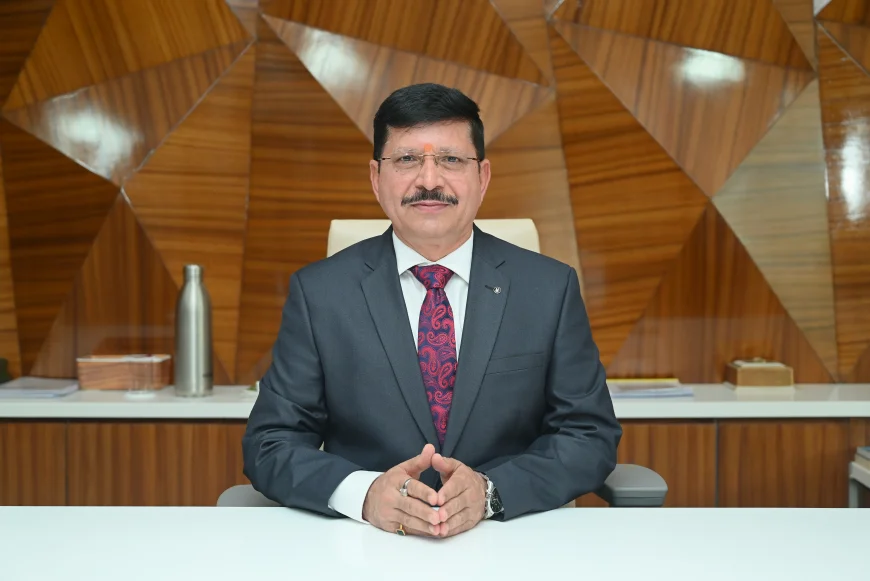
South Eastern Coalfields Limited occupies a central position in India’s energy ecosystem. Operating across vast coal-bearing regions of Chhattisgarh and Madhya Pradesh, the company plays a decisive role in sustaining energy availability while navigating rising expectations around efficiency, safety, and environmental responsibility.
Harish Duhan assumed charge as Chairman and Managing Director of South Eastern Coalfields Limited in March last year, stepping into the leadership of one of Coal India’s largest coal-producing subsidiary at a time when energy security, efficiency, and institutional accountability occupy the centre of national policy discourse. A mining engineer by training and a career professional within the coal sector, Duhan brings more than three decades of operational and strategic experience across Coal India’s key production arms, positioning him to guide SECL through a phase of sustained demand and structural transition.
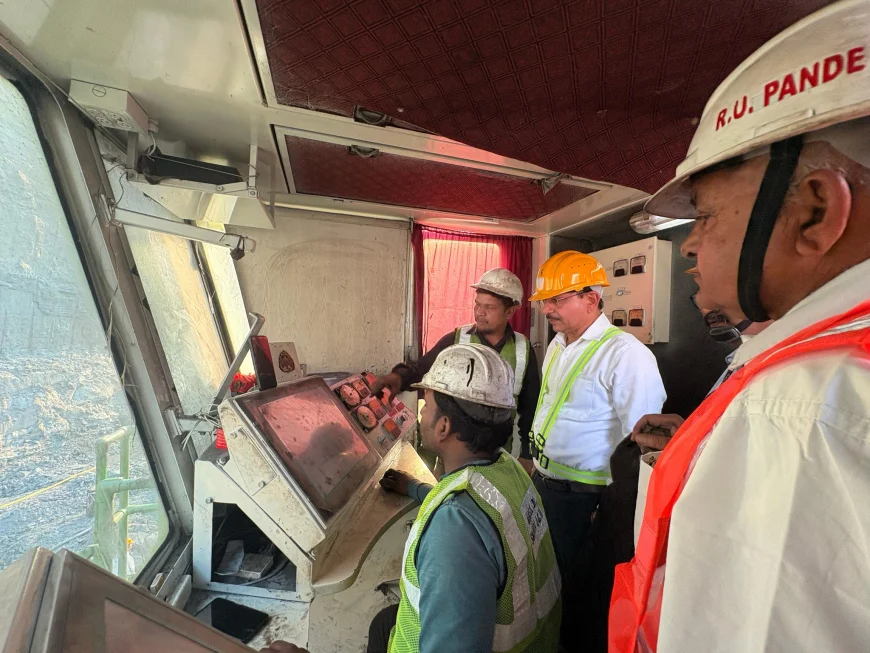
His professional journey spans senior technical and leadership roles at Western Coalfields Limited, Northern Coalfields Limited and Central Coalfields Limited, where he played a critical role in enabling long-term capacity growth through accelerated land acquisition, faster environmental and forest clearances, and strengthened project planning frameworks. Across these assignments, he was closely involved in improving coal quality management, driving the implementation of first-mile connectivity projects, and advancing digital transformation initiatives that enhanced transparency, reliability, and operational control.
He also contributed significantly to the expansion of renewable energy, particularly solar projects, and to embedding a zero-harm safety culture through systems-based governance and technology-led monitoring.
As Chairman-cum-Managing Director, Duhan’s mandate extends beyond production performance to aligning SECL’s operations with national energy priorities, regulatory expectations and the evolving imperatives of sustainable, technology-driven and responsible mining.
Q1. As CMD of SECL since March last year, what have been your principal priorities, and how do they align with national energy goals?
One of my foremost priority has been to strengthen SECL’s role as a reliable pillar of India’s energy security, while addressing the structural enablers that underpin sustainable production growth. Among these, land acquisition, rehabilitation and resettlement (R&R), and timely resolution of land-related claims have been central.
The year 2025 was challenging, marked by an extended monsoon, complex land issues and logistics constraints. However, we approached these challenges with a clear focus on transparency, coordination and speed. As a result, SECL achieved a significant breakthrough in land acquisition, securing possession of 236 hectares of land between Apr-Nov’25 up from 29 Ha for same period in 2024, for our mega projects in the Korba coalfields.
Land compensation disbursed increased from ₹74 crore to ₹241 crore, reflecting a nearly 260 percent rise, and 736 affected families were successfully rehabilitated in Apr-Nov’25. These outcomes have helped unlock critical project capacity and created a stable foundation for future production expansion.
Operationally, this progress directly supports our key mines—such as Gevra, Dipka and Kusmunda, which are vital to sustaining domestic coal availability.
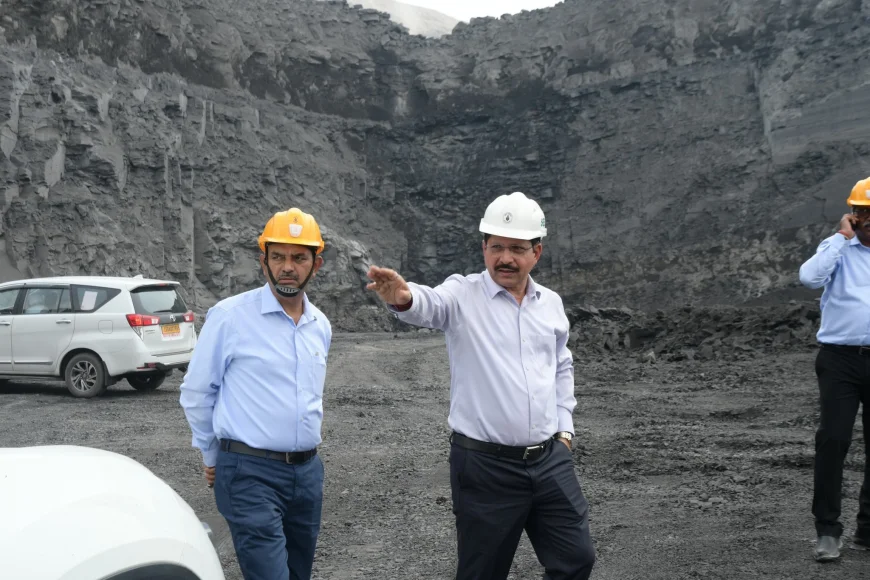
Gevra which is the largest coal mine in Asia and second largest in the world is our flagship project producing more than 6000 tons of coal every hour is set to go past 50 Million Tons of coal production for the third consecutive year. Another key project, Kusmunda, which produced 28 MT in FY24-25 is aiming to cross 40 MT in FY 25-26. The third megaproject, Dipka is also doing exceptionally well and is on track to achieve the annual target of 40 MT.
Alongside this, we are strengthening institutional mechanisms for faster settlement of claims, closer engagement with landowners, and better coordination with state authorities, ensuring that growth is inclusive and socially responsible.
In parallel, SECL is advancing efficiency and safety across the value chain through first-mile connectivity projects, technology-enabled monitoring systems, such as the state-of-the-art Integrated Command Control Center (ICCC), and the expanded use of surface miners in Opencast mines and deployment of mass production technology such as Continuous Miners in UG mines for blast-free coal extraction, in line with the Ministry of Coal’s vision.
Sustainability and community engagement remain integral—through ecological restoration, productive reuse of mined-out land, and a gradual transition toward net-zero operations supported by renewable energy.
Q2. How does SECL align itself with the Ministry of Coal’s vision for expanding underground coal production in India?
South Eastern Coalfields Limited views the Ministry of Coal’s vision to scale India’s underground (UG) coal production to 100 million tonnes by FY 2030 as both a strategic opportunity and an institutional responsibility.
SECL is already the leading contributor to underground coal production within Coal India. In FY 2024–25, when Coal India’s total UG output stood at 25.44 million tonnes, SECL alone accounted for 11.87 million tonnes, the highest among all subsidiaries.
The deployment of 22 Continuous Miners SECL is already delivering gains in productivity, safety, and cost efficiency, while enabling blast-free extraction from deep-seated coal reserves without strata damage, critical for long-term energy security.
This capability is set to be further strengthened with the planned induction of six additional Continuous Miners in FY 2025–26, and a phased expansion strategy that aims to scale the fleet to 50+ Continuous Miners over the next few years, positioning SECL as a key enabler of large-scale, technology-driven underground mining in India.
Q3. What operational reforms are most critical for improving efficiency and sustaining coal output?
At South Eastern Coalfields Limited, a central reform has been the adoption of a “Production with Purity, Dispatch with Quality” approach, which places customer confidence at the core of production planning. Quality assurance and sampling protocols across SECL have been tightened and digitally monitored, resulting in measurable improvements in coal quality and customer satisfaction.
This company-wide focus on quality is reflected in both aggregate performance and site-level outcomes. Overall coal quality compliance across SECL improved from 59 percent in November 2024 to 75 percent in November 2025, marking a significant year-on-year enhancement.
The turnaround at the Dipka Mine, in particular, has drawn appreciation and strengthened relationships with major consumers such as NTPC, reinforcing SECL’s commitment to reliable, customer-centric coal supply.
Q4. How is Digitalization reshaping mining operations at SECL?
Digitalization has emerged as a core enabler of operational control, safety, and governance at South Eastern Coalfields Limited, marking a clear shift from manual supervision to integrated, data-driven management across mining and corporate functions.
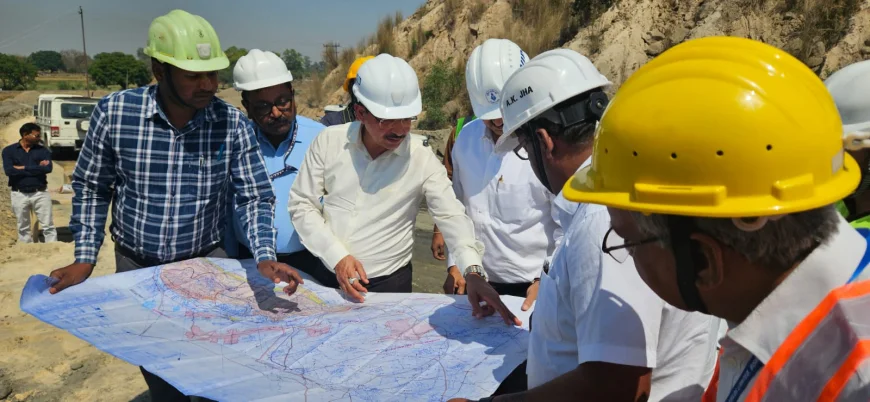
At the operational level, this transformation is anchored in the Integrated Command and Control Centre (ICCC), which functions as SECL’s digital nerve centre. Operations across 16 command areas are monitored in real time through 754 CCTV cameras, AI-based video analytics, and live dashboards, covering mines, coal stocks, weighbridges, and transportation. Automated real-time alerts related to PPE non-compliance, fire risks, unauthorised access, and safety deviations enable faster decision-making and tighter operational discipline.
Beyond mining operations, 2025 has seen the rollout of several enterprise-level digital platforms that are reshaping internal governance and service delivery. The Internal Selection Portal has streamlined promotions and internal mobility for non-executive employees with end-to-end digital transparency. The Jatayu Dashboard provides a single-point repository of circulars, SOPs, and manuals, strengthening compliance and informed decision-making. Contract governance has been reinforced through a Contract Monitoring Portal, while the Land & R&R Portal has brought end-to-end digital tracking of land acquisition, compensation, possession, and employment records with plot-wise transparency.
Together, these initiatives demonstrate how digitalization at SECL extends beyond technology adoption to institutional reform—enhancing safety, efficiency, transparency, and accountability—while ensuring the organisation remains resilient, responsive, and aligned with national energy priorities.
Q5. In what ways has first-mile connectivity improved coal evacuation and logistics?
First-mile connectivity has fundamentally transformed coal evacuation at South Eastern Coalfields Limited by gradually shifting operations away from road-dependent, truck-based movement to automated, rail-linked systems.
FMC integrates in-pit conveyor belts, silos and rapid loading systems to enable seamless movement of coal directly from the mine face to the railhead. By sharply reducing dependence on road transport, these projects have lowered diesel consumption and reduced emissions while also enhancing safety by taking large volumes of traffic off public roads.
In practical terms, FMC functions like a dedicated pipeline, reducing truck movements—creating a continuous, controlled, and environmentally responsible flow of coal from mine to market, fully aligned with SECL’s quality, safety, and sustainability objectives.
At present, FMC projects with a cumulative capacity of 151 million tonnes per annum have already been commissioned across SECL, covering our major production centres. These systems are closely aligned with dedicated rail infrastructure being developed through Chhattisgarh East Railway Limited (CERL) and Chhattisgarh East West Railway Limited (CEWRL), which together are strengthening evacuation capacity and reducing rake turnaround time.
Looking ahead, an additional 35 million tonnes of FMC capacity is expected to be commissioned in 2026, and our long-term roadmap is to scale FMC to around 241 million tonnes per annum in the coming years. This will ensure that evacuation capacity grows in step with production expansion, eliminating logistics bottlenecks before they arise.
Q6. SECL has been the first coal PSU in India to adopt Paste Fill Technology. How does this initiative reflect the company’s approach to safe and sustainable underground mining?
The adoption of Paste Fill Technology represents a decisive step forward in redefining underground coal mining in India. As the first coal PSU in the country to implement this technology, SECL is demonstrating that safety, sustainability, and resource optimization can advance together.
The technology is being implemented at the Singhali Underground Mine in SECL’s Korba Area, where the voids created after coal extraction will be systematically filled with a specially engineered paste composed of fly ash, crushed overburden, and binders. This approach provides immediate and long-term ground support, significantly enhances strata stability, and mitigates the risk of surface subsidence—an increasingly critical concern as mining progresses beneath inhabited and environmentally sensitive regions.
Beyond safety, Paste Fill Technology enables higher recovery from difficult and constrained coal seams that would otherwise remain unmined due to geotechnical limitations. It also promotes the productive reuse of mine waste and fly ash, aligning underground mining with principles of the circular economy and reducing the overall environmental footprint of operations.
Q7. As production scales up, what systems and practices has SECL put in place to maintain a strong safety culture on the ground?
South Eastern Coalfields Limited balances production requirements with safety through its “Mining with a Conscience” framework, under which output growth is planned and executed within clearly defined safety and regulatory limits.
At the operational level, this balance is achieved through the systematic adoption of safer and cleaner extraction technologies. In large opencast mines, surface miners have increasingly replaced conventional drilling and blasting, significantly reducing noise, ground vibration, dust generation and potential risks to surrounding communities. At SECL’s megaprojects, over 90 percent of coal extraction is now carried out through surface miners.
Underground operations have increasingly shifted to continuous miners and highwall mining, which reduce human exposure by relying on automated and remotely operated systems. The transition to first-mile connectivity has made coal evacuation safer by reducing accident risks by reducing truck-based transport with conveyors and silos.
Building a culture of safety depends on a skilled, safety-conscious workforce. Continuous training and sensitisation programmes are supporting the transition to advanced equipment and data-driven operations, reinforced by safety training and structured capacity-building initiatives.
Regular training programmes and specialised workshops are conducted in collaboration with experts from the Directorate General of Mines Safety (DGMS) and the Indian Institute of Technology (Indian School of Mines), Dhanbad, with a focused emphasis on upskilling and sensitising frontline supervisors, who play a critical role in ensuring safe and efficient operations at the mine level.
These efforts are complemented by periodic updates aligned with DGMS-prescribed standards and evolving best practices in mine safety and operations along with regular safety inspections and audits. Together, these reforms ensure that productivity gains are durable, safety-led and fully aligned with national energy security objectives.
Q8. SECL operates at a large mining scale. How is the company addressing environmental conservation and ecological restoration alongside production growth?
Environmental conservation is integral to SECL’s mining philosophy, and our focus is on restoring ecological balance along side sustained production. Afforestation has been one of our most consistent and impactful interventions. In FY 2025–26, SECL planted over 1.36 million saplings across more than 550 hectares, while cumulative plantation since inception has crossed 30 million saplings. These efforts are aimed at rebuilding green cover, improving biodiversity and stabilising mined landscapes.
We are also expanding Miyawaki plantations, which enable the rapid development of dense, native forests.
We are also expanding the use of Miyawaki plantations, a technique that enables the rapid development of dense, native forests and delivers visible ecological outcomes within a short timeframe. At the Gevra mega project in Korba district, a Miyawaki forest has already been developed over 2 hectares with nearly 20,000 native saplings, while at the Chhal mine in Raigarh district, around 25,000 saplings have been planted across 2.5 hectares using the same approach.
Building on these encouraging results, SECL is now extending Miyawaki plantations to 10 hectares across its operational areas, creating more self-sustaining green pockets within active mining regions.
Equally important is our focus on responsible mine closure. Scientific mine closure plans are being implemented to ensure that mined-out areas are systematically reclaimed and repurposed. In the Korba coalfields, new eco-parks are being developed on reclaimed land, transforming former mining zones into green, community-friendly public spaces.
Together, these initiatives reflect SECL’s commitment to ensuring that mining leaves behind productive, green and socially valuable landscapes, not ecological voids.
Q9. SECL’s mine water utilisation programme is often cited as a best practice. How has this initiative supported farmers and local communities?
Mine water utilisation is a strong example of how SECL integrates sustainability with community development. Each year, our mines discharge nearly 800 lakh kilolitres of water due to natural seepage during operations. Instead of allowing this resource to go unused, SECL has developed a comprehensive system to collect and reuse mine water.
Of this, around 334 lakh kilolitres is used internally for dust suppression, cooling and safety. About 124 lakh kilolitres is supplied to nearby villages for domestic use. Most significantly, nearly 283 lakh kilolitres is channelled for agricultural irrigation, benefiting over 3,800 hectares of farmland around our operational areas. The balance contributes to groundwater recharge.
This initiative has brought a tangible transformation in rural livelihoods. Farmers who earlier depended on erratic rainfall now have assured irrigation, enabling two crop cycles annually, diversification into horticulture, and a meaningful increase in income. It demonstrates that responsible mining can directly strengthen rural economies and climate resilience.
Q10. How is SECL preparing for energy transition and long-term sustainability beyond conventional coal mining?
SECL recognises that while coal will remain critical to India’s energy security, the future demands a gradual transition towards cleaner and diversified energy solutions. A key pillar of this transition is renewable energy. SECL has already commissioned 41 MW of solar power capacity, which has helped reduce approximately 31,750 tonnes of CO₂ emissions. We have a clear roadmap to expand solar capacity to 700 MW, aligning with our long-term vision of becoming a net-zero company.
To complement this, electric vehicles have been deployed across SECL’s headquarters and operational areas, reducing emissions from internal mobility and logistics.
Beyond renewables, we are actively exploring setting surface coal gasification project at Mahamaya OC in our Bhatgaon Area, which offers cleaner utilisation of coal resources. SECL is also examining opportunities to set up its own thermal power generation capacity, explore recovery of rare earth and critical minerals from overburden, and assess the feasibility of pumped storage projects to support grid stability and renewable integration.
Through these initiatives, SECL is positioning itself not merely as a coal producer, but as a future-ready energy and resource organisation aligned with India’s long-term sustainability and energy transition goals.
Q11. SECL has made sustained investments in community development across coal-bearing regions. How do your CSR initiatives in education, healthcare, skill development and women empowerment translate into long-term social impact on the ground?
At SECL, CSR is viewed as a strategic responsibility rather than a peripheral activity, with a clear focus on creating long-term social and economic value in coalfield regions. Since 2014, the company has invested over ₹850 crore across healthcare, education, skill development, livelihood generation, women empowerment and rural infrastructure, aimed at strengthening both human capital and local institutions.
In education, our flagship initiative ‘SECL Ke Sushrut’ provides free NEET coaching to 40 meritorious students every year from coal belt areas, helping talented youth pursue careers in medicine regardless of their economic background. In school education, the Digi-Vidya initiative has enabled the installation of over 800 smart classrooms in government schools, significantly improving digital learning infrastructure. This effort has been further strengthened through a recent MoU with EDCIL and Jashpur (Chhattisgarh) district administration to install 206 interactive panels in government schools, expanding access to technology-enabled education.
Healthcare interventions have been equally impactful. Under the ‘SECL Ki Dhadkan’ programme, more than 180 children with congenital heart defects have undergone life-saving surgeries in collaboration with Satya Sai Sanjeevani Hospital, Raipur, offering renewed hope to families in remote and underserved regions.
Skill development remains a key pillar of SECL’s CSR strategy. Through structured technical and vocational training programmes, including initiatives undertaken in collaboration with CIPET, SECL has trained over 2,360 youth from coalfield communities, many of whom have secured gainful employment. These interventions are strengthening employability, expanding livelihood opportunities and supporting long-term economic resilience in mining-affected regions.
Collectively, these initiatives reflect SECL’s integrated approach to CSR—one that connects health, education, skills, women empowerment and rural development to create enabling ecosystems in coal-bearing regions. By strengthening social infrastructure alongside industrial operations, SECL seeks to ensure that growth in these regions is inclusive, sustainable and future-ready.
Q12: Women’s participation in coal mining has traditionally been limited. What initiatives has SECL taken to promote women empowerment and create meaningful leadership opportunities for women across the organisation?
At South Eastern Coalfields Limited, women empowerment is viewed as a core organisational priority rather than a standalone initiative. Our focus has been on creating real operational responsibility, leadership opportunities and an enabling work environment that allows women to contribute meaningfully across technical, medical, administrative and community-facing roles.
SECL has taken several pioneering steps in this direction. We have launched Coal India’s first fully women-operated dispensary at our headquarters, where women doctors, nurses, pharmacists and support staff independently manage healthcare services. In the core technical domain, the all-women Condition Based Monitoring (CBM) laboratory at the Central Excavation Workshop, Gevra, is another significant milestone, with women engineers and technicians handling advanced diagnostics for heavy mining equipment. We have also commissioned Coal India’s first all-women operated Central Store Unit, where women officers manage inventory, logistics and materials using SAP-based digital systems—areas traditionally dominated by men.
Beyond the workplace, SECL believes empowerment must also address physical, mental and social well-being. In this spirit, the ‘Nari Shakti Khel Mahotsav 2025–26’, organised across all SECL areas and culminating in a grand inter-area finale, promoted fitness, confidence and teamwork among women employees and family members.
Together, these initiatives reflect SECL’s broader philosophy: women empowerment is about opportunity, responsibility and trust. By integrating women into core operational roles and supporting their overall well-being, SECL is working toward a more inclusive, balanced and future-ready organisation.
Q13. How has your experience across WCL, NCL, and CCL influenced your leadership style?
My leadership approach has been shaped by working across varied operating and organisational contexts within Coal India, each contributing a distinct perspective on how sustainable performance is built. I began my career at Western Coalfields Limited (WCL), where the emphasis was on mine-level discipline, safety and regulatory compliance. That phase instilled a strong respect for ground realities and reinforced the belief that credibility is earned through consistent execution, adherence to systems and a deep understanding of operational risks.
At Northern Coalfields Limited, particularly at the Nigahi mega project, managing high-capacity opencast mines reinforced the importance of long-term planning, coal quality assurance and timely statutory clearances. A key focus during this phase was on accelerating environmental and forest clearances, strengthening grade conformity, and driving digital transformation under Project DigiCoal. The commissioning of a 50 MW pit-head solar power plant at Nigahi, along with automation and systems-led interventions, improved operational reliability and laid a strong foundation for sustained production growth.
This perspective was further sharpened at Central Coalfields Limited, where corporate-level responsibilities expanded the focus to integrated planning, expedited land acquisition and R&R, execution of large-scale first-mile connectivity projects, and logistics optimisation. Efforts to fast-track FMC and rail corridor projects, improve evacuation capacity, enhance coal quality performance, and embed a zero-harm safety culture helped remove structural bottlenecks and strengthen system-level performance.
Collectively, these experiences have shaped a leadership style anchored in anticipatory planning, disciplined execution and systems-driven decision-making. At South Eastern Coalfields Limited, this translates into a clear focus on regulatory preparedness, quality-led production, technology adoption and capacity building—ensuring that growth in output remains aligned with national energy security objectives and long-term sustainability.
Q14. What advice would you offer young engineers aspiring to work in the mining and energy sector?
Coal will continue to play a pivotal role in meeting India’s energy needs and will remain a key driver of Viksit and Atmanirbhar Bharat in the years ahead. At the same time, the coal sector itself is undergoing a profound transformation. For young engineers, this makes mining and energy not a static industry, but one of the most dynamic and opportunity-rich domains to build a career.
Alongside core coal production, the sector is actively diversifying into renewable energy such as solar power, pumped storage projects, and other clean energy solutions, as well as alternate and value-added uses of coal including surface coal gasification. There is also growing focus on extracting critical and rare earth minerals from overburden, which opens entirely new technical frontiers. This transition requires engineers with strong fundamentals who are also willing to develop new technical acumen and aptitude for emerging technologies.
Young professionals should see this as an opportunity to learn continuously, grow across disciplines, and contribute in diverse and evolving roles—from operations and planning to sustainability, digital systems and energy transition initiatives. Engineering excellence today means combining field experience with data-driven thinking, automation, safety leadership and environmental responsibility.
Most importantly, this sector offers purpose. Engineers who bring curiosity, integrity and adaptability will not only build fulfilling careers, but also contribute meaningfully to national energy security and industrial transformation. Organisations like South Eastern Coalfields Limited provide a platform where young engineers can grow with the sector—helping shape a more resilient, responsible and future-ready energy ecosystem for India.