

Alok Tripathi, IRTS Officer, Appointed Joint Secretary in Petroleum Ministry
IRTS officer Alok Tripathi appointed Joint Secretary in the Petroleum Ministry.

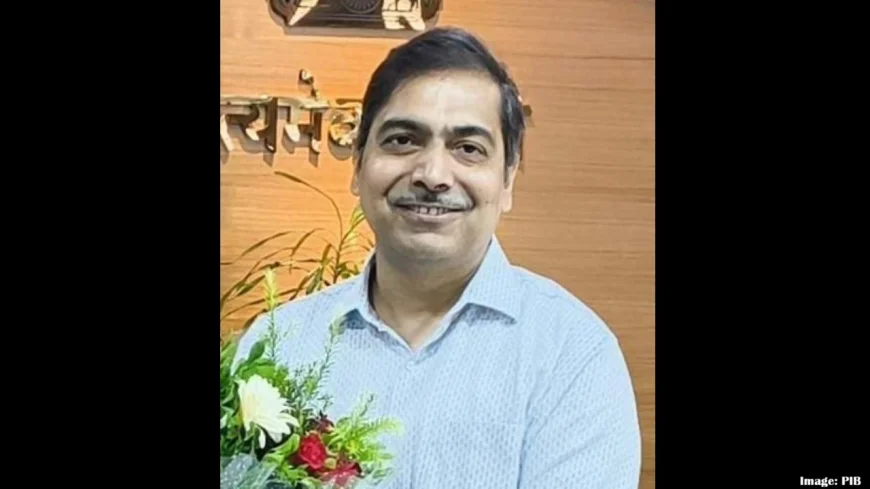
Alok Tripathi, a 1999-batch officer of the Indian Railway Traffic Service, has been appointed Joint Secretary in the Ministry of Petroleum and Natural Gas, placing him in an administrative role within the ministry responsible for energy policy, petroleum exploration oversight, and natural gas sector management.
Joint Secretary-level appointments at the Ministry of Petroleum and Natural Gas typically carry responsibility for a defined policy vertical, spanning areas such as upstream exploration licensing, refining sector coordination, natural gas pricing policy, or international energy cooperation, with the specific portfolio assignment usually following shortly after the initial appointment order once the ministry allocates charge among its Joint Secretary-level officers.
Tripathi's move from the Indian Railway Traffic Service into a central economic ministry reflects the central staffing scheme's practice of drawing Joint Secretary-level officers from across organised Group A services based on administrative capability rather than restricting appointments to officers with direct petroleum-sector background, a pattern the ministry has followed periodically for cross-functional policy and coordination roles.
His prior experience in railway transport administration, an area involving large-scale logistics coordination and public sector operational management, is expected to inform his approach to petroleum sector policy coordination, given the overlapping demands both sectors place on infrastructure planning and multi-stakeholder project execution.
The Ministry of Petroleum and Natural Gas has been managing an active policy agenda around energy security, diversification of crude oil import sources, and expansion of natural gas infrastructure, areas where the ministry's Joint Secretary-level officers play a central coordination role between policy formulation and implementation across public sector oil and gas enterprises.
The appointment order was processed through the Department of Personnel and Training's central staffing scheme in coordination with the Ministry of Petroleum and Natural Gas.
The Indian Railway Traffic Service, Tripathi's parent cadre, is responsible for operational and commercial functions within Indian Railways, including train operations planning, freight and passenger traffic management, and coordination between zonal railways on network utilisation, a background that differs from the more finance- or infrastructure-focused cadres that also feed into the central staffing scheme's pool of eligible officers. Joint Secretary-level appointments at the Ministry of Petroleum and Natural Gas typically require several years of central deputation experience, with officers usually having served in at least one prior central assignment before being considered for a ministry posting of this seniority.
The ministry's policy portfolio spans both the upstream sector, covering exploration and production licensing for domestic oil and gas fields, and the downstream sector, covering refining, marketing, and distribution, with Joint Secretary-level officers typically assigned oversight of one or more of these verticals depending on the ministry's internal allocation of charges. Cross-cadre appointments of this kind, drawing an officer with railway operations experience into an energy policy role, reflect the central staffing scheme's broader approach of valuing administrative and coordination capability developed in large public-sector operational settings, which the ministry considers transferable to its own multi-stakeholder policy coordination requirements.