


Ashwini Vaishnaw Launches Qualcomm's 2nm Semiconductor Chip in Bengaluru
Ashwini Vaishnaw launched Qualcomm 2 nm semiconductor chip, marking a significant moment in advanced semiconductor design and India’s Key Role in Global Engineering Operations yesterday

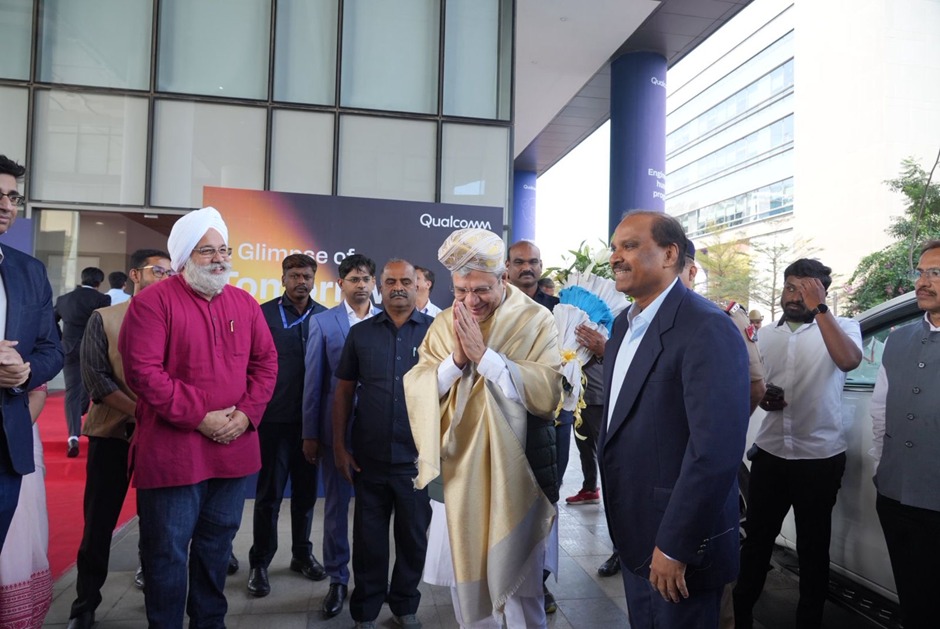
Union Minister for Electronics and Information Technology Ashwini Vaishnaw launched Qualcomm's 2-nanometre semiconductor chip in Bengaluru, marking a milestone moment for India's advanced chip design ecosystem and its growing role in global semiconductor engineering operations.
In his keynote address, Vaishnaw framed the launch within the broader trajectory of India's semiconductor mission, tracing the sector's history back to the 1960s, when Fairchild Semiconductor, the company from which Intel later emerged, had explored setting up a semiconductor unit in India but did not proceed, a decision he attributed to the government of that period not fully grasping the strategic importance of chip manufacturing.
Vaishnaw described the current semiconductor push as beginning with a measured approach focused on establishing India's first functioning fabrication units before scaling further, starting with 28-nanometre process technology on the basis that it addresses roughly 75 percent of domestic chip demand across automotive, telecom, power management, and strategic applications, a segment considered less capital-intensive to establish than advanced sub-10-nanometre fabrication while still covering the bulk of near-term industrial need.
According to the minister, ten semiconductor units are currently under construction across the country under the mission, with four having begun pilot production and now working through product qualification and validation with customers ahead of full commercial output, progress he characterised as a new chapter for India's semiconductor ambitions building on sustained policy support.
Qualcomm's 2nm chip launch in Bengaluru specifically highlights the advanced design end of India's semiconductor ecosystem, where global chip designers maintain substantial engineering operations in the country even as domestic fabrication capacity is still being built out separately, a distinction between chip design expertise, where India has an established talent base, and chip fabrication capacity, which remains nascent and is the specific focus of the government's fab-building programme.
The event adds to a series of recent semiconductor sector milestones the government has highlighted as part of its push to position India within global chip supply chains, spanning both design services and the longer-term fabrication capacity buildout still in its early stages domestically.
The India Semiconductor Mission, under which the current wave of fab construction and design investment falls, was set up as a specialised, dedicated body within the Ministry of Electronics and Information Technology to steer the country's chip strategy, spanning incentive administration, coordination with state governments on land and infrastructure for fab sites, and engagement with global semiconductor firms on both design and manufacturing investment. Qualcomm's presence in India has historically centred on chip design and research and development rather than fabrication, with the company operating substantial engineering campuses in cities including Bengaluru and Hyderabad that contribute to global product lines rather than serving the domestic market alone.
Semiconductor fabrication and chip design represent distinct stages of the same supply chain, with fabrication requiring capital-intensive physical plants to manufacture chips from silicon wafers, while design work, of the kind highlighted at this Bengaluru event, involves the architecture and engineering that precedes manufacturing and can be conducted independently of where the eventual fabrication occurs. India's strength has historically been concentrated in the design segment, given the country's large pool of electronics and semiconductor engineering talent, while fabrication capacity is a more recent and still-developing addition to that ecosystem under the government's mission.