


Called on the scientific community, researchers and young innovators to deliver concrete, measurable and scalable technological outcomes
The inaugural day of the Emerging Science, Technology and Innovation Conclave (ESTIC) 2026 brought together more than 5,000 global delegates, including scientific leaders, policymakers and deep-tech startups, at Bharat Mandapam in New Delhi on October 27.

The inaugural day of the Emerging Science, Technology and Innovation Conclave (ESTIC) 2026 brought together more than 5,000 global delegates, including scientific leaders, policymakers and deep-tech startups, at Bharat Mandapam in New Delhi on October 27. The day’s programme combined addresses by national science and technology leaders, two Nobel Laureate plenary talks, three parallel technical sessions, a startup exhibition and poster track, an evening panel discussion along with the inaugural session. Across these proceedings, the focus was on connecting foundational research with industrial scale-up, public purpose and the development of technologies that can strengthen India’s capabilities and contribute to global welfare.
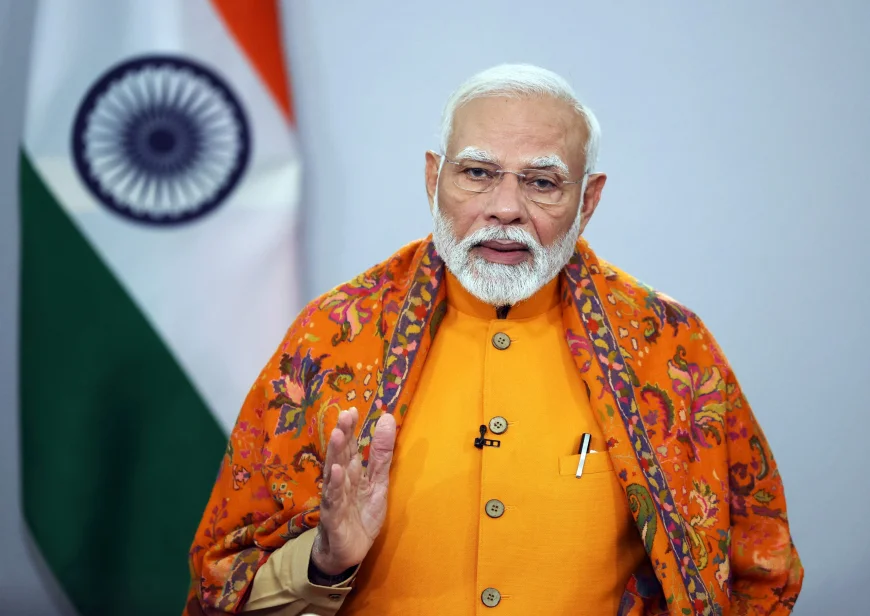
In his inaugural address, Prime Minister Sri Narendra Modi called on the scientific community, researchers and young innovators to deliver concrete, measurable and scalable technological outcomes within a three-year operational horizon. He emphasised that scientific breakthroughs should move beyond laboratory settings to address real-world problems, reinforce national self-reliance under the vision of Atmanirbhar Bharat, and advance human welfare. The address also reaffirmed India’s commitment to setting global benchmarks in frontier areas, including artificial intelligence, quantum technologies, advanced materials and biotechnology.
Dr. Jitendra Singh, Union Minister of State (Independent Charge) for Science and Technology and Earth Sciences, described a shift in India’s role in science and technology, from being a consumer of technologies to becoming a future-ready global co-creator of frontier scientific solutions. He highlighted the expansion of the country’s startup ecosystem from approximately 400 startups in 2014 to more than 2.3 lakh today. An estimated 50 to 60 per cent of these startups are based in Tier-2 and Tier-3 cities, the Minister cited as evidence of the wider spread of technological entrepreneurship.
Dr. Jitendra Singh also identified India’s genetic and phenotypic diversity as an important resource for biotechnology and called for stronger domestic capabilities in gene synthesis, systems biology and nuclear medicine. He referred to recent legislative reforms, including the SHANTI Act, in the context of accelerating work in these fields. His remarks placed indigenous research capability and the development of applications from India’s scientific strengths among the priorities for the country’s biotechnology ecosystem.
Prof. Ajay K. Sood, Principal Scientific Adviser to the Government of India, set out the need for closer alignment between basic scientific research, industrial scale-up and regulatory policy. He described ESTIC’s 12 core thematic priority domains and identified areas including quantum communication, generative and autonomous artificial intelligence, semiconductor fabrication, advanced manufacturing and the Deep Ocean Mission. His address situated the conclave as a forum for connecting research with the institutions, industrial capacities and policy frameworks needed to develop sovereign national capabilities.
Prof. Joachim Frank of Columbia University, the 2017 Nobel Laureate in Chemistry, delivered a plenary talk on cryo-electron microscopy (Cryo-EM) in target discovery and drug design. His presentation covered computational and mathematical frameworks used in high-resolution, single-particle Cryo-EM and the three-dimensional visualisation of macromolecular complexes. The session described how structural information about these complexes can support rational drug-design workflows and help researchers investigate biological targets.
Sir Richard J. Roberts, the 1993 Nobel Laureate in Physiology or Medicine, delivered a separate plenary on split genes and frontiers in life sciences. His talk covered the fundamental mechanisms of gene splicing, microbial genomics and restriction-modification enzymes. It also considered biotechnology initiatives relevant to sustainable agriculture, public health and diagnostics, linking advances in the life sciences with applications in food systems and healthcare.
Earlier, Dr. Jitendra Singh inaugurated the startup exhibition and poster track. The exhibition featured deep-tech research and development displays, startup prototype showcases and interactive poster presentations. It provided an opportunity for industry stakeholders, investors, academic researchers and policymakers to engage with research and emerging technologies across the conclave’s areas of focus.