


Focus on pulses, oilseeds, diversification and income of small farmers: Union Agriculture Minister Shivraj Singh Chouhan
Shivraj Singh Chouhan, on the occasion of the Northern Regional Agriculture Conference organised with the objective of giving a new direction to agriculture and farming in northern India, said that the future path of agricultural development would no longer be determined through a uniform policy for all regions. He said that agriculture planning must now move according to regional requirements, climatic conditions, water availability and local crop situations.

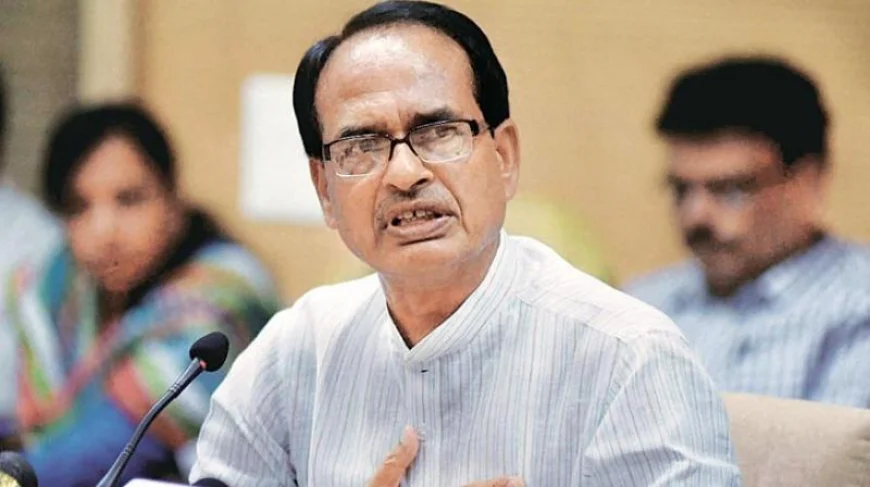
Shivraj Singh Chouhan, on the occasion of the Northern Regional Agriculture Conference organised with the objective of giving a new direction to agriculture and farming in northern India, said that the future path of agricultural development would no longer be determined through a uniform policy for all regions. He said that agriculture planning must now move according to regional requirements, climatic conditions, water availability and local crop situations.
Addressing a press conference in Lucknow, he spoke in detail on the strategy for kharif and rabi crops, self-reliance in pulses and oilseeds, diversification in agriculture, integrated farming for small farmers, Kisan Credit Card, Farmer ID, natural farming, fertiliser subsidy, relief for potato farmers and the preparation of strict laws against fake agricultural inputs. He said the Centre and the states would jointly prepare a concrete roadmap to make agriculture more profitable, sustainable and farmer-centric.
The Northern Regional Agriculture Conference held in Lucknow has been presented by the Central Government as a broad platform for regional coordination. Speaking to the media, Shri Chouhan said that climate, water resources, land conditions and crop patterns differ across various parts of the country. Therefore, it was felt that one single national conference would not be sufficient to address all agricultural realities.
With this thinking, the country has been divided into five regions and a decision was taken to organise five regional agriculture conferences. The conference being held in Lucknow is the second phase of that series.
He said the Government of India has schemes for agricultural development, officers, research institutions and significant scientific capacity. However, agriculture is a state subject, and therefore the actual implementation of schemes is possible only with the cooperation of state governments. For this reason, a complete roadmap for kharif and rabi seasons is being prepared jointly with the states. At the same time, pressing issues that directly affect farmers’ income, production and markets are also being brought to the discussion table.
The Union Minister said that the scope of discussion would no longer remain limited only to kharif and rabi crops. Important questions such as how agriculture can be diversified, how farming can be made more profitable, how India can become self-reliant in pulses and oilseeds, and how horticulture and processing can be encouraged are central to the conference.
He said India has created new records in foodgrain production and remarkable progress has been made in wheat and paddy output. The country has reached a leading position in rice production, and due to improved wheat production, the government has also allowed the export of 50 lakh metric tonnes of wheat.
However, he made it clear that despite achievements in foodgrain production, self-reliance in pulses and oilseeds remains extremely important. He said it is the responsibility of the government to ensure sufficient foodgrain and nutritious food for 140 crore Indians. Therefore, three major objectives have been fixed for agricultural policy — ensuring national food security, improving farmers’ income and livelihood, and making nutritious foodgrain available to the people.
Shri Shivraj Singh Chouhan said the government’s strategy is moving forward on six major pillars. These include increasing production, reducing cost of cultivation, ensuring farmers get full value for their hard work, guaranteeing compensation when losses occur, promoting agricultural diversification and connecting farming with markets. He said that merely depending on wheat-paddy based agriculture would not be sufficient for the future. Therefore, strengthening pulses, oilseeds, horticulture, fruits and vegetables, food processing and value addition has become the need of the time.
He made special mention of the condition of small farmers and said that in states such as Uttar Pradesh a very large number of farmers possess small holdings. In such circumstances, farming models that generate higher income from limited land are essential. Shri Chouhan said integrated farming systems such as intercropping, combining grains with fruits and vegetables, animal husbandry, fisheries, beekeeping and tree-based farming can prove highly useful for small farmers. The Central Government has prepared several such models which will be shared with the states so they may be implemented according to local requirements.
During the press conference, the Union Minister also strongly emphasised the Kisan Credit Card scheme. He said crores of farmers still do not have complete access to affordable formal agricultural credit. Therefore, a special campaign will be launched to ensure that every eligible farmer receives a Kisan Credit Card. He said if a farmer receives timely credit at low interest rates, he will be able to use better seeds, fertilisers, machinery and other resources. This, in turn, will increase both productivity and income.
He described Farmer ID as a major reform in agricultural governance. According to him, after the creation of Farmer ID, details such as land records, khasra number, livestock and other necessary information relating to a farmer would be available on a single platform. This would mean that farmers would no longer need to repeatedly run from office to office carrying documents in order to receive benefits under different schemes. Government benefits could be delivered more quickly, transparently and in a targeted manner. He said crores of Farmer IDs have already been created and states have been instructed to complete the remaining process rapidly.
The Union Minister also said that the Central Government wishes to strengthen the concept of ‘Lab to Land’ through a campaign in cooperation with state governments. He said that under the Viksit Krishi Sankalp Abhiyan, teams of scientists and officials will travel village to village, interact with farmers through farmer meetings and explain modern research, new technologies, better seeds and scientific methods that can increase production. He said unless the knowledge generated in laboratories reaches the fields, farmers cannot receive the real benefit of research.
Referring specifically to Uttar Pradesh, he said the Central Government stands with state governments in every circumstance. He noted that after the fall in potato prices, approval has been granted under the MIS (management information systems) scheme for procurement of 20 lakh metric tonnes of potatoes so that relief can be provided to farmers. He further announced that a decision has been taken to establish an International Processing Centre in Uttar Pradesh to strengthen potato production, research, processing and storage infrastructure. This will help farmers secure better prices for their produce and create processing-based opportunities.
To promote horticulture, he said nine Clean Plant Centres are being established in the country. Their objective is to provide farmers with high-quality, disease-free and better-yielding planting material so that the horticulture sector receives fresh momentum. He said that the Pulses Mission, Oilseeds Mission, quality seed availability, horticulture expansion and agricultural diversification are among the key agenda items of the conference.
Replying to a question on fertiliser prices, Shri Shivraj Singh Chouhan said that the burden of rising international fertiliser prices would not be allowed to fall on farmers. He said that in the recent Cabinet meeting chaired by Prime Minister Narendra Modi, an additional amount of Rs 41,000 crore was approved so that farmers continue to receive urea at Rs 266 per bag and DAP (diammonium phosphate) at Rs 1,350 per bag. He made it clear that the Government of India itself is bearing the impact of global inflation in the fertiliser sector so that the cost burden on farmers does not rise.
On the issue of adulteration, fake seeds, fake pesticides and quality of agricultural inputs, he adopted a firm position. He said this is not only a question of farmers’ crops but also a serious matter concerning human health. He said adulteration in fruits, vegetables and other food products, as well as imbalanced use of chemicals, increases the risk of diseases. Therefore, while the government is promoting natural farming, it is also conducting a campaign against fake and adulterated agricultural products.
Speaking on natural farming, he said imbalanced use of chemical fertilisers affects the health of the soil and also impacts human health. For this reason, the Central Government has launched the National Mission on Natural Farming. He acknowledged that farmers beginning natural farming may face transitional challenges during the initial years. Therefore, a provision has been made for financial assistance per hectare so that farmers do not feel unsupported during this change.