


India's ethanol blending program delivered transformational results; ₹1.58 lakh crore earnings to Indian farmers turning our Annadatas to Urjadatas
Flex Fuel Vehicles offer India a practical solution to reduce crude oil imports, strengthen the rural economy through ethanol demand, and advance low-carbon mobility, Union Minister for Petroleum and Natural Gas Shri Hardeep Singh Puri said during the Launch of Hero MotoCorp’s First Flex-Fuel Motorcycle in New Delhi, today. Union Minister for Road, Transport and Highways, Shri Nitin Gadkari was also present during the event.

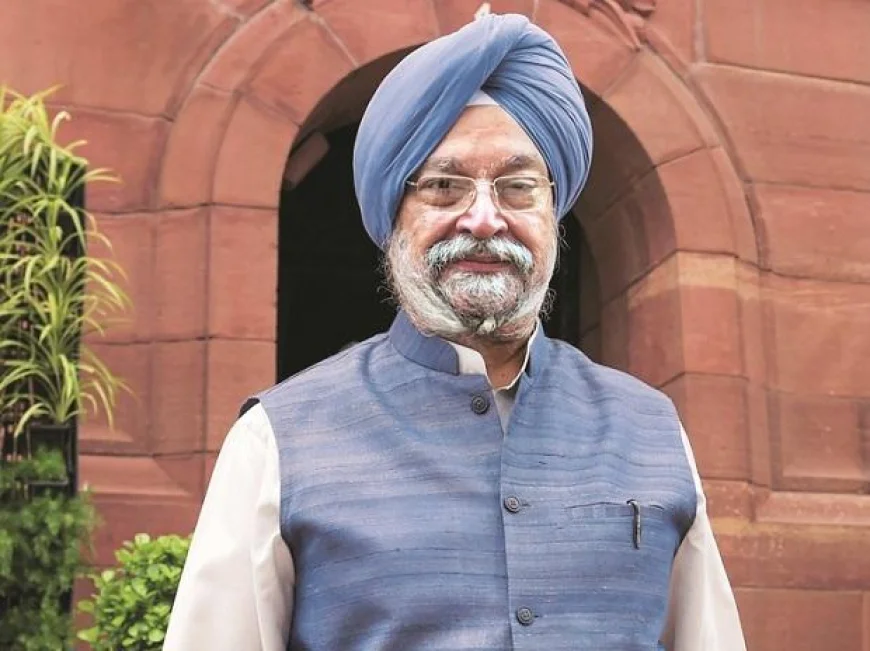
Flex Fuel Vehicles offer India a practical solution to reduce crude oil imports, strengthen the rural economy through ethanol demand, and advance low-carbon mobility, Union Minister for Petroleum and Natural Gas Shri Hardeep Singh Puri said during the Launch of Hero MotoCorp’s First Flex-Fuel Motorcycle in New Delhi, today. Union Minister for Road, Transport and Highways, Shri Nitin Gadkari was also present during the event.
Sh. Puri described the launch as a new chapter in India’s energy history, with the introduction of new motorcycles compatible with ethanol blends from E20 to E85. He added that the launch of the Splendor+ and HF Deluxe Flex Fuel motorcycles marks India’s entry into mass-market flex-fuel mobility with Aatmanirbhar vehicles. ‘भारत की बाइक, भारत का ईंधन!’
India has one of the world’s largest two-wheeler ecosystems with an active two-wheeler fleet of over 300 million vehicles. The flex-fuel technology has the potential to transform mobility at an unprecedented scale.
Today’s historic launch is a defining moment in India’s mobility and ethanol blending quest which was at just 1.5% in 2014 and has now achieved 20% blending, even as we look beyond, the minister further added. It will help reduce our energy imports bill and continue to provide an additional source of income to our farmers who have become Urjadatas from only being the country’s Annadatas.
Minister said that India's future mobility ecosystem will combine EVs, biofuels, hydrogen and renewables in a manner suited to Indian realities. He noted that India currently imports nearly 88.5% of its crude oil requirement, making the economy and energy security vulnerable to geopolitical disruptions.
The ethanol blending program of Government of India, since ESY 2014-15 has saved India ₹1.84 lakh crore in foreign exchange, resulted in 302 lakh metric tonnes crude oil substitution and 909 lakh metric tonnes reduction in CO₂ emissions. The significant output is that the program has added ₹1.58 lakh crore earnings to farmers turning our Annadatas to Urjadatas.
The Minister said that even 1% adoption of annual petrol vehicle sales in India during ESY 2026-27 would generate a demand for 4 crore litres of ethanol in which payments of about ₹266 crore will be made to distilleries and save us ₹195 crore in foreign exchange . This would lead to reduction of approximately 0.28 lakh metric tonnes of crude oil imports, and a net CO₂ reduction of nearly 0.86 lakh metric tonnes.
Importantly, around ₹160 crore would flow directly to Indian farmers, instead of going out of the country for oil imports. He said the impact would become transformational as flex-fuel technology scales across India’s vast two-wheeler ecosystem.