


Artificial Intelligence can substitute everything, but it cannot substitute integrity: Dr Jitendra Singh
"Artificial Intelligence (AI) can substitute everything on this planet, but it cannot substitute integrity. Artificial Intelligence can transform systems, improve efficiency and expand access, but it cannot replace human integrity".

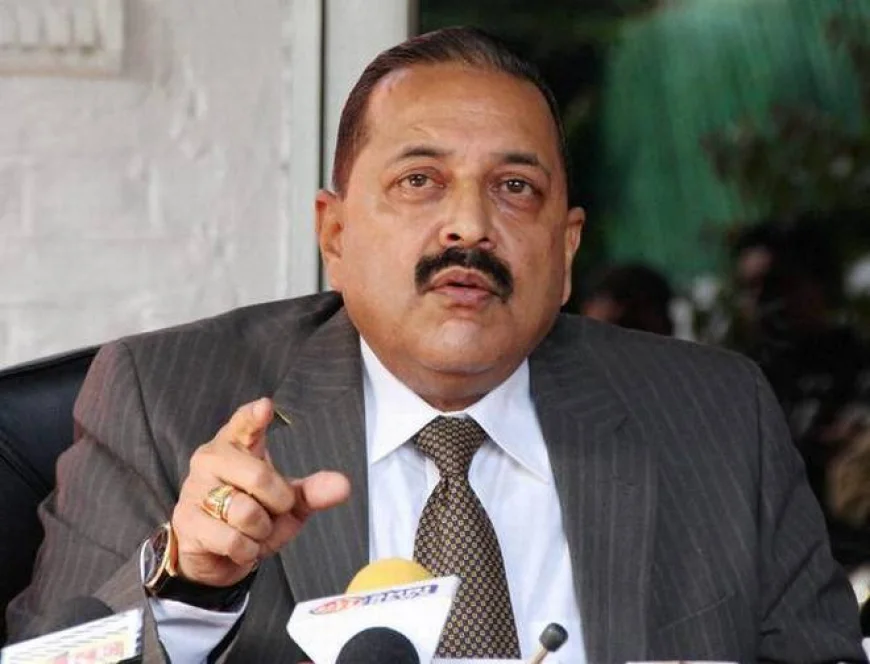
"Artificial Intelligence (AI) can substitute everything on this planet, but it cannot substitute integrity. Artificial Intelligence can transform systems, improve efficiency and expand access, but it cannot replace human integrity".
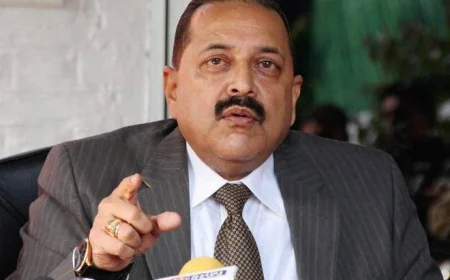
With this powerful assertion, Union Minister of State (Independent Charge) for Science & Technology; Earth Sciences; and Minister of State in PMO, Personnel, Public Grievances, Pensions, Atomic Energy and Space, Dr. Jitendra Singh delivered the keynote address at the “AI Impact Summit 2026 India” at Bharat Mandapam, here. The session, titled “AI for Viksit Bharat: The Capacity Building Imperative, “brought together policymakers, administrators, and experts to deliberate on the convergence of governance, capacity building, and Artificial Intelligence.
Addressing the gathering, Dr. Jitendra Singh invoked the Mantra "MANAV" cited by PM Narendra Modi in his address yesterday while emphasising the human-centric approach in the use of AI, and described governance and capacity building as dynamic, continuous processes that must evolve with the pace of change in today’s fast-moving world. He remarked that in an era where technological transitions happen rapidly, institutions must constantly upgrade themselves to remain future-ready.
Artificial Intelligence, he said, has become an inescapable reality across domains and must be meaningfully integrated into public systems.
The Minister said the most encouraging aspect of India’s transformation journey is the presence of a political leadership willing to embrace futuristic as well as future-ready ideas. Recalling that themes like AI-driven governance would have been unimaginable in official discourse a decade and a half ago, he credited Prime Minister Narendra Modi’s reform-oriented approach for creating an enabling environment where innovation and governance reforms move together.
The Minister spoke about the government’s efforts over the last decade to remove nearly 2,000 outdated rules that had outlived their relevance. Many of these regulations, he remarked, were designed for a different era and could not have anticipated today’s technological advancements. The simplification of procedures, including eliminating unnecessary attestations and redundant practices, reflects a shift towards trust-based governance.
He explained that the Capacity Building Commission was conceived to ensure that learning itself becomes a continuous institutional habit. In a rapidly evolving ecosystem, he said, public servants must not only learn new practices but also build the capacity to keep learning. The idea of blending best practices from both public and private sectors, he added, has strengthened governance reforms and helped build more agile systems.
Referring to the concept of Digital Public Goods (DPG), Dr. Jitendra Singh said that while the terminology may be new, the essence remains rooted in the principle of public good and citizen-centric governance. From the very beginning, the government has pursued the vision of “maximum governance, minimum government,” focusing on transparency, accountability, and ease of living. Technology, he said, is an enabler, not the end.
Sharing practical experiences, the Minister spoke about the evolution of the CPGRAMS grievance redressal system. While disposal rates had touched impressive levels through digital processing, citizen satisfaction did not always match the numbers. This led to the introduction of a human interface alongside AI-driven mechanisms. The experience demonstrated that the most effective model is a hybrid one, combining Artificial Intelligence with Human Intelligence.
Dr Jitendra Singh cited another example from the health sector, where AI-assisted telemedicine services operate alongside physical doctors. While AI enhances efficiency and reach, the presence of a human doctor reassures patients and builds trust. Such models, he said, are particularly suited to India’s diverse social and linguistic landscape, where technology must adapt to local realities.