


Centre Splits MoHUA, Names IAS Officer D Thara First Secretary of New Capital Development Department
Centre bifurcates MoHUA, creates Department of Capital Development and appoints IAS officer D Thara as its first Secretary.

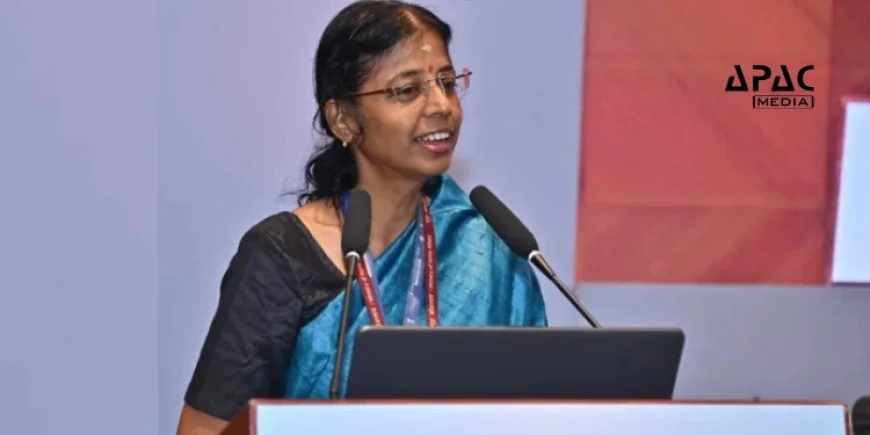
The central government has bifurcated the Ministry of Housing and Urban Affairs, carving out a new Department of Capital Development to oversee the National Capital Region, and has appointed D Thara, a 1995-batch IAS officer of the Gujarat cadre, as its first Secretary, the Appointments Committee of the Cabinet confirmed.
The restructuring splits the ministry into two verticals: the Department of Capital Development, dedicated to Delhi and NCR governance, and the Department of Urban Development, which will continue to handle nationwide urban policy. Officials say separating capital-specific administration from broader urban programmes is meant to speed up infrastructure decisions and policymaking that have historically had to compete for attention with national schemes inside a single ministry. Thara moves into the role from her post as Additional Secretary in the ministry, filling a vacant Secretary-level position.
A director recruit into the IAS, Thara was born on July 3, 1971 in Tamil Nadu and holds a B.Sc in Zoology, an M.Sc in Biotechnology, and an Executive Master's in Public Administration from the Maxwell School at Syracuse University in the United States. She is fluent in English, Tamil and Gujarati. She joined the Ministry of Housing and Urban Affairs as Joint Secretary in July 2019 and was promoted to Additional Secretary in December 2021, a central deputation that has now been extended by the ACC until December 5, 2026.
Before her move to the Centre, Thara spent close to two decades in the Gujarat government working across urban administration and district governance. She served as Municipal Commissioner of the Ahmedabad Municipal Corporation, Managing Director of the Gujarat Industrial Development Corporation, Chief Executive Officer of both the Ahmedabad Urban Development Authority and the Gandhinagar Urban Development Authority, and District Collector of Ahmedabad and Kheda, besides earlier postings as District Development Officer in Vadodara and Surendranagar.
Her most cited body of work is Ahmedabad's Bus Rapid Transit System, widely regarded as one of India's most successful urban transport initiatives, which she helped plan and implement. She also led preparation of Ahmedabad's Second Revised Draft Development Plan-2021 and Gandhinagar's first comprehensive development plan, both of which incorporated concepts such as central business districts, transit-oriented development and dedicated affordable housing zones. As Municipal Commissioner, she oversaw an expansion of clean surface water access to more than 7.5 lakh Ahmedabad residents alongside upgrades to sewage treatment infrastructure.
At the Centre, Thara has been involved in housing reforms and the Smart Cities programme, and has served as a member of the Delhi Development Authority and the Delhi Urban Art Commission, giving her direct exposure to the capital's planning apparatus ahead of her new assignment. That combination of state-level execution experience and central policy exposure is part of why officials describe her appointment as a natural fit for a department built specifically around NCR governance.
As the department's inaugural Secretary, Thara will be responsible for building its institutional framework from the ground up, including its internal structure, coordination mechanisms with the Delhi government and its policy priorities for the capital region. The appointment was cleared as part of a broader reshuffle of senior IAS officers approved by the ACC this week, alongside multiple secretary-level appointments across ministries.
The bifurcation itself marks one of the more significant structural changes inside the Ministry of Housing and Urban Affairs in recent years. Officials familiar with the plan say the earlier single-department structure meant NCR-specific projects were often queued behind nationwide housing and urban development schemes for ministerial attention and budgetary sign-off. A standalone department, they argue, gives Delhi and its satellite towns a dedicated institutional channel, with its own Secretary answerable specifically for the region's infrastructure timelines rather than sharing that responsibility across a wider national portfolio.