


Dharmendra Pradhan and Jayant Chaudhary Visit MSDE Pavilion at India AI Impact Summit
Dharmendra Pradhan and Union Minister of State (Independent Charge) for Skill Development and Entrepreneurship and Minister of State for Education, Shri Jayant Chaudhary, yesterday visited the Pavilion of the Ministry of Skill Development and Entrepreneurship (MSDE) at the ongoing India AI Impact Summit 2026 at Bharat Mandapam, highlighting the Government of India’s commitment to positioning artificial intelligence as a catalyst for inclusive growth and human capital development.

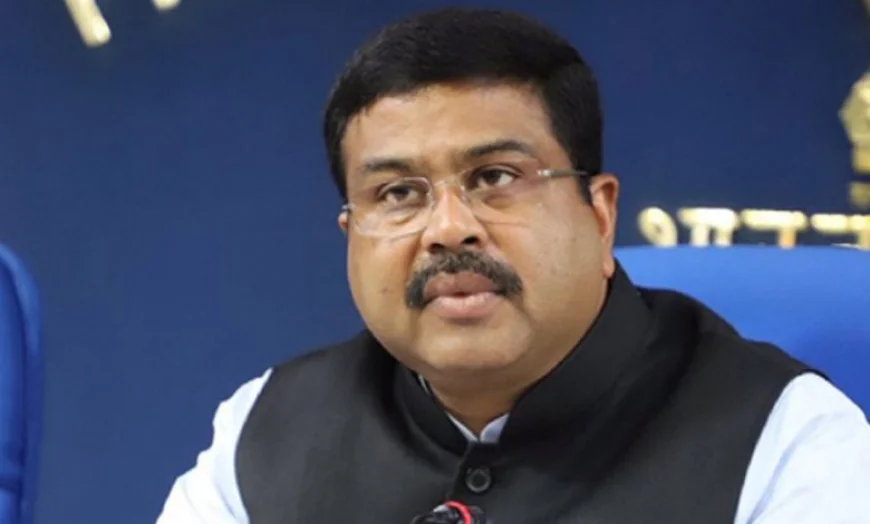
Dharmendra Pradhan and Union Minister of State (Independent Charge) for Skill Development and Entrepreneurship and Minister of State for Education, Shri Jayant Chaudhary, yesterday visited the Pavilion of the Ministry of Skill Development and Entrepreneurship (MSDE) at the ongoing India AI Impact Summit 2026 at Bharat Mandapam, highlighting the Government of India’s commitment to positioning artificial intelligence as a catalyst for inclusive growth and human capital development.
During the visit, the Ministers witnessed innovations firsthand at the Pavilion, which showcased practical, scalable and India-first AI solutions translating policy vision into tangible, on-ground impact. The Pavilion demonstrated how AI can move beyond high-end applications to become a tool for expanding opportunity, improving productivity and strengthening livelihoods across sectors and segments.
The Pavilion provided a view of how artificial intelligence can move beyond elite or high-end applications to create real, measurable impact for youth, workers, entrepreneurs and the informal sector. Through immersive demonstrations and interactive experiences, the Pavilion translated policy intent into practical solutions—showing how AI can expand access to skills, enhance productivity and strengthen everyday livelihoods.
At the core of the Pavilion was a comprehensive framework built around skilling in AI, skilling with AI and skilling for AI, clearly articulating how artificial intelligence is being embedded across the skilling ecosystem. Skilling in AI focuses on building both foundational and advanced AI competencies through initiatives such as SOAR (Skilling for AI Readiness), NSQF-aligned emerging job roles and short-duration nano-credentials developed in close partnership with industry. Visitors experienced micro-learning modules, live dashboards and interactive installations that demonstrated how AI literacy can be democratised across age groups, educational backgrounds and geographies—enabling learners to transition into AI-enabled and future-facing careers.
Interacting with youth participants, startups and solution providers at the Pavilion, Shri Jayant Chaudhary stressed that India’s AI strategy must remain deeply inclusive and employment-oriented. He noted that artificial intelligence should augment human capability rather than displace it, and that skilling systems must evolve in tandem with technological progress to ensure that India’s demographic dividend is future-ready.
A major attraction for visitors was the AI-enabled recommendation engine powered by the National Skill Development Corporation under SIDH. The platform integrates learning, certification and career pathways into a unified digital ecosystem, enabling students and young professionals to receive personalised skilling and career recommendations based on their education, interests and aspirations. The solution supports the government’s objective of democratising AI education by guiding informed skilling choices and connecting learners with industry-aligned opportunities.
The Pavilion’s “Skilling for AI” gamified experience zone further brought the human impact of AI to life through relatable, real-world personas from India’s informal and blue-collar workforce. Interactive demonstrations illustrated how a small farmer can use AI-enabled tools for soil monitoring and pest prediction; how an electrician can diagnose faults instantly using mobile-based AI applications; how a construction worker can access multilingual AI learning support on-site; and how a weaver can co-create customised designs using AI tools to access new markets and improve incomes. These use cases reinforced the message that AI is not limited to coders or large enterprises, but can act as a productivity multiplier for everyday livelihoods.
Complementing this was the “Skilling with AI” segment, which showcased how artificial intelligence is transforming the delivery, monitoring and governance of skill development itself. AI-powered systems such as the Skill India Assistant guide learners on career pathways aligned with their qualifications and interests, while recommendation engines embedded within the Skill India Digital Hub personalise course suggestions across sectors.
The Pavilion also highlighted AI-enabled monitoring and assessment innovations, including computer vision–based tools that objectively evaluate hands-on skills through real-time observation of task execution. By moving beyond theory-led testing, these technologies enhance transparency, standardisation and credibility in skill certification, particularly in informal and shop-floor settings. Integrated with NSQF pathways approved by NCVET, these tools enable accurate skill validation, improved training quality and clear progression routes for learners across the Skill India ecosystem.