


India's Peak Power Demand Hits Record 270.82 GW as Summer Heatwave Drives Cooling Load
India's peak electricity demand hit an all-time high of 270.82 GW on May 21 — the fourth consecutive day of records — as soaring temperatures pushed air-conditioning usage to unprecedented levels, stretching the national grid.

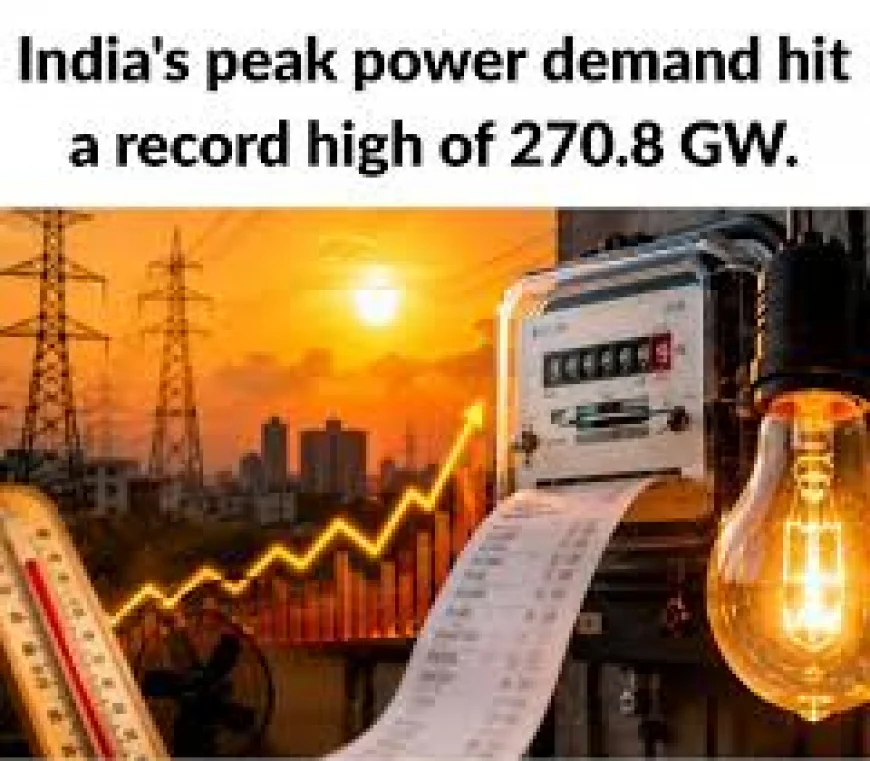
India's power grid registered a new all-time peak power demand of 270.82 GW at 3:45 PM on May 21, 2026, during solar hours, marking the fourth consecutive day the country set a fresh demand record amid an intense summer heatwave.
The Ministry of Power confirmed the surge was met successfully, describing the outcome as evidence of the grid's growing resilience and generation capacity to absorb sharp, sustained spikes in electricity demand during peak summer conditions.
The scale of the increase is notable in historical context: peak demand had reached 250 GW in May 2024, itself a record at the time that surpassed the previous 243.27 GW peak set in September 2023, meaning the 2026 figure represents an 8.3 percent jump within roughly two years, driven by rapid electrification, rising household incomes, and particularly severe summer heat.
The Ministry attributed the extraordinary demand primarily to widespread use of cooling appliances, including air conditioners, coolers, and fans, as temperatures across northern and central India climbed well above normal seasonal levels, consistent with the India Meteorological Department's earlier forecast of an intense 2026 summer.
The sustained demand records carry direct operational implications for the power sector's major public enterprises: NTPC, the country's largest power generator, has operated its fleet at high plant load factors to meet the peak, POWERGRID has managed elevated load flows across inter-regional transmission corridors, and state distribution companies have faced pressure to minimise unscheduled outages during the demand surge.
For policymakers, the 270 GW milestone adds urgency to accelerating renewable energy capacity addition, battery storage deployment, and demand-side management measures, with India's target of 500 GW of installed renewable capacity by 2030 taking on sharper relevance given how quickly peak summer demand is now growing.
The Ministry has not indicated whether the current record is expected to be surpassed further this summer, though the pattern of consecutive record-breaking days suggests continued monitoring of grid performance through the remainder of the season.