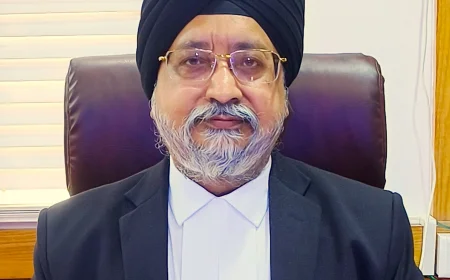



Shaleen Appointed Director in Department of Investment and Public Asset Management
Shaleen, a 2012-batch IAS officer of the Haryana cadre, has been appointed Director in the Department of Investment and Public Asset Management, under the…


Shaleen, a 2012-batch IAS officer of the Haryana cadre, has been appointed Director in the Department of Investment and Public Asset Management, under the Ministry of Finance, for a tenure of five years, according to the order clearing his central deputation.
DIPAM handles the government's disinvestment programme, strategic sale of central public sector enterprises, and management of the government's shareholding across listed PSUs, a portfolio that has taken on renewed weight as the government pushes to meet its annual disinvestment receipts target. A Director in the department typically manages transaction-level work on specific disinvestment or asset monetisation cases, coordinating with merchant bankers, legal advisers, stock exchanges, and the PSUs concerned through every stage of a transaction. The department also periodically explores asset monetisation routes beyond outright equity sale, including leasing and infrastructure investment trust structures for physical assets held by central PSUs.
Shaleen has served in the Haryana cadre since 2012, with postings across district administration and state departments before his move to the Centre. Officers taking up DIPAM postings are usually drawn from batches with prior exposure to finance or industry-related assignments, since the department's transaction work requires close reading of valuation reports, merchant banker mandates, and coordination with capital markets regulators such as SEBI on disclosure requirements.
DIPAM's five-year Director-level postings are structured to give officers enough time to see individual disinvestment transactions through from initial approval to closure, since strategic sales and public offerings can take several years to complete once share purchase agreements are finalised and regulatory clearances obtained. Shaleen's tenure is expected to span at least one full disinvestment cycle from Cabinet approval through to transaction closure.
The department has been working through a mixed pipeline of minority stake sales in listed PSUs and stalled strategic disinvestment cases, several of which have faced delays over valuation disputes and employee union resistance at the enterprise level. Shaleen's appointment adds capacity to a department that has seen frequent churn in its Director-level ranks over the past two years, with several transactions awaiting fresh momentum. Employee unions at several PSUs facing disinvestment have used litigation and public campaigns to delay share sales, adding an additional layer of negotiation to transactions that already involve multiple regulatory clearances.
With the government's disinvestment receipts consistently falling short of Budget targets in recent years, DIPAM has been under pressure to close pending transactions and identify fresh candidates for minority stake sales, work that depends heavily on Director-level officers managing individual cases through inter-ministerial clearance, market timing, and investor roadshows where required. DIPAM has periodically had to revise its annual receipts target mid-year when market conditions or transaction delays make the original figure unachievable.
DIPAM's transaction pipeline typically runs through several stages before a stake sale reaches the market, starting with in-principle Cabinet approval, followed by the appointment of transaction advisers and merchant bankers, due diligence, and finally regulatory filings with SEBI and the stock exchanges before a public offering or strategic sale can be launched. A Director managing a transaction is expected to track each of these stages closely, since delays at any single stage, whether from valuation disagreements or changes in market conditions, can push a transaction's timeline back by months or even years, as has happened with several stalled strategic sales in the department's pipeline.
The appointment is for a period of five years, as per the order.