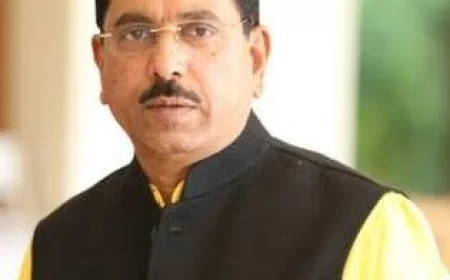



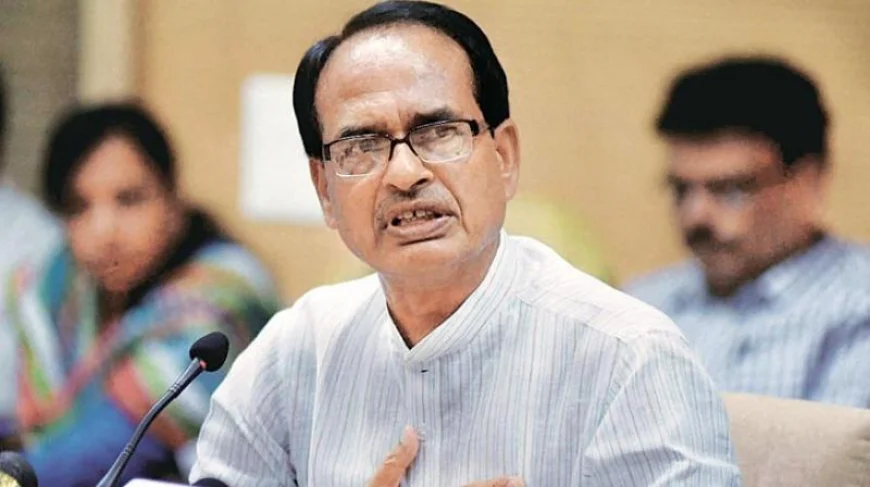
Shivraj Singh Chouhan inaugurated various new facilities of ICAR-IIAB in Ranchi through video conferencing
The ICAR–Indian Institute of Agricultural Biotechnology (ICAR-IIAB), Garhkhatanga, Ranchi, organized a Pre-Rabi Kisan Goshti-cum-Agricultural Input Distribution Programme under the Scheduled Caste Sub-Plan (SCSP) and Tribal Sub-Plan (TSP) on 8th October, 2026. The programme brought together around 1,500 farmers from Ranchi, Khunti, Gumla and Ramgarh districts to facilitate direct interaction between farmers, scientists and policymakers and to promote the adoption of scientific and sustainable agricultural practices.

The ICAR–Indian Institute of Agricultural Biotechnology (ICAR-IIAB), Garhkhatanga, Ranchi, organized a Pre-Rabi Kisan Goshti-cum-Agricultural Input Distribution Programme under the Scheduled Caste Sub-Plan (SCSP) and Tribal Sub-Plan (TSP) on 8th October, 2026. The programme brought together around 1,500 farmers from Ranchi, Khunti, Gumla and Ramgarh districts to facilitate direct interaction between farmers, scientists and policymakers and to promote the adoption of scientific and sustainable agricultural practices.
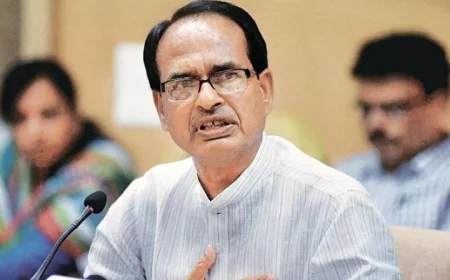
On this occasion, the Union Minister of Agriculture and Farmers’ Welfare Shri Shivraj Singh Chouhan inaugurated various new facilities of ICAR-IIAB through video conferencing. The facilities inaugurated included the Admin-cum-School Building, Birsa Munda Multipurpose Hall, Jaipal Singh Munda Sports Complex, NEXTGEN Breeding Facility and laid the foundation for a new Guest House facility at ICAR-IIAB worth Rs 119 Crore rupees.
In his address, Shri Chouhan highlighted the importance of scientific agriculture, improved seeds, integrated farming, balanced nutrient management and location-specific agricultural technologies for Jharkhand. He also appreciated the institute’s efforts towards taking research and technologies to farmers and called for sustained farmer awareness and field-level extension.
Shri Shivraj Singh Chouhan highlighted the rich natural and traditional heritage of Jharkhand and described ICAR-IIAB as an important confluence of agricultural research, innovation and self-reliance. He emphasized that while traditional knowledge remains valuable, contemporary agricultural challenges require farmers to increasingly adopt scientific and technology-driven farming practices suited to local resources and agro-climatic conditions. He stressed the importance of ensuring timely availability of improved seeds and taking appropriate agricultural technologies from research institutions to farmers’ fields.
The Union Minister emphasized the importance of integrated farming, including vegetables, cereals and livestock, along with proper knowledge of balanced fertilizer use. He particularly stressed the need to protect farmers from fake seeds, counterfeit fertilizers and substandard pesticides. He also called for effective implementation of farmer welfare schemes and ensuring that their benefits reach every village. Highlighting the importance of preparing farmers for the forthcoming Rabi season, he appreciated the efforts of scientists in taking technologies from “Lab to Land” and urged them to undertake a nationwide Khet Bachao Abhiyan in the coming days.
Shri Bhagirath Choudhary, Union Minister of State for Agriculture and Farmers’ Welfare, highlighted the central role of farmers in the country’s food security and development. He emphasized the adoption of modern agricultural technologies, value addition, stronger Farmer Producer Organisations and Krishi Vigyan Kendras, soil testing and balanced fertilizer use. He also encouraged farmers to experiment with natural farming on a part of their cultivated area and stressed the need to protect farmers from spurious seeds, counterfeit fertilizers and substandard pesticides. He called for effective implementation of farmer welfare schemes and stronger efforts to take agricultural technologies from Lab to Land.
Dr. M. L. Jat, Secretary, DARE and Director General, ICAR, highlighted the potential of eastern India for a new agricultural transformation and emphasized the importance of strengthening agricultural research and knowledge institutions in Jharkhand. He called for wider adoption of Rice-Fallow Intensification, location-specific crop and variety selection, improved livestock productivity and research addressing challenges such as acidic soils and phosphorus deficiency. He also stressed the importance of natural and organic farming and appropriate planning for the forthcoming Rabi season.