


Union Agriculture Minister Calls for Water-Based Crop Planning, Stronger Preparedness for Rabi 2026
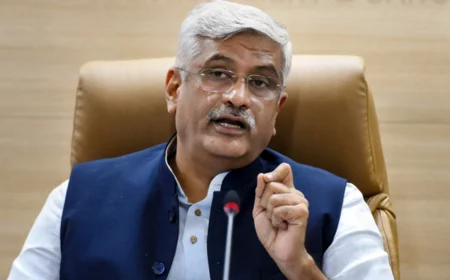
Shivraj Singh Chouhan, yesterday called upon States to complete preparations for the Rabi season through coordinated planning, scientific assessment and close field-level monitoring. Addressing the two-day National Agriculture Conference – Rabi Campaign 2026 in New Delhi, he said that amid climate change, erratic rainfall and water constraints, food security and higher farm incomes would require data-driven planning and stronger Centre-State coordination rather than conventional approache

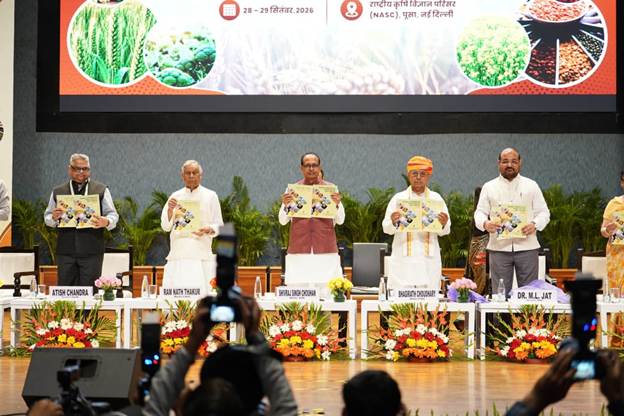
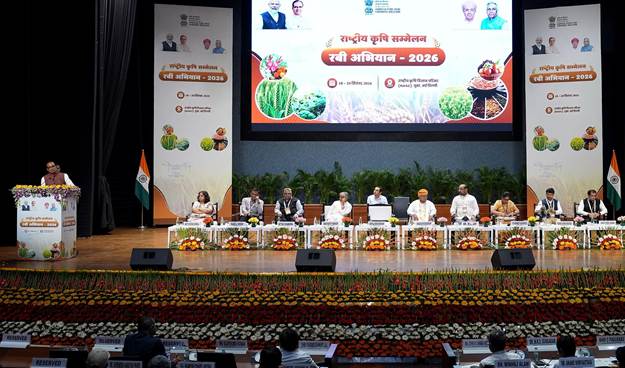
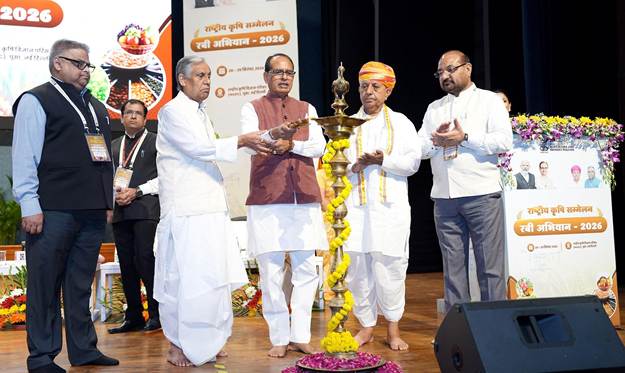
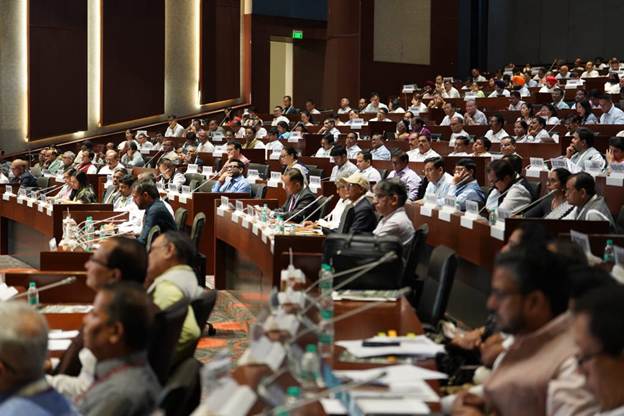
Shivraj Singh Chouhan, yesterday called upon States to complete preparations for the Rabi season through coordinated planning, scientific assessment and close field-level monitoring. Addressing the two-day National Agriculture Conference – Rabi Campaign 2026 in New Delhi, he said that amid climate change, erratic rainfall and water constraints, food security and higher farm incomes would require data-driven planning and stronger Centre-State coordination rather than conventional approaches. The conference, organised by the Department of Agriculture and Farmers’ Welfare at the Bharat Ratna C. Subramaniam Auditorium, NASC Complex, Pusa, was attended by Union Ministers of State for Agriculture and Farmers’ Welfare Shri Ram Nath Thakur and Shri Bhagirath Choudhary, Secretary, Department of Agriculture and Farmers’ Welfare, Shri Atish Chandra, Director General, ICAR, Dr. M.L. Jat, senior officials from the Centre and States, Principal Secretaries and Directors of Agriculture, Vice-Chancellors of State Agricultural Universities, heads of ICAR institutes, and representatives of KVKs, ATMA and other stakeholders. In his inaugural address, Shri Chouhan said Rabi 2026 is an important phase in advancing the vision of a self-reliant and developed India. The conference, he said, is aimed at strengthening Centre-State coordination, raising agricultural production and productivity, promoting sustainability and preparing a coordinated, outcome-oriented strategy for enhancing farmers’ incomes.
Water Budget Must Guide Crop Planning
Shri Chouhan identified the water budget as one of the most important parameters for Rabi planning, asking every State and district to assess the water available for irrigation before finalising crop plans. Areas with limited water availability should prioritise less water-intensive crops such as pulses and oilseeds, while areas with assured irrigation can plan other crops accordingly. He said rainfall has remained below normal, although not to an extent that would severely affect water availability at the national level. However, water shortages in some States remain a concern. States must assess water availability and soil moisture in vulnerable areas and make arrangements for irrigation in advance. “There should be no situation where a crop requiring more water is sown and adequate water is subsequently unavailable, resulting in crop losses,” he said, stressing that preparations must begin immediately as the Rabi sowing window is approaching. Rainfed areas, in particular, require careful planning as the availability of soil moisture largely determines the crop choice and outcome.
Centre to Undertake Ground Assessment of Drought-Hit Areas
Expressing concern over drought conditions in Maharashtra and Karnataka, Shri Chouhan said nearly two-thirds of Maharashtra has been affected and the State has declared drought, while Karnataka is also facing drought-like conditions. He said a Central team would undertake a ground assessment in Karnataka on October 3, while a Central team would also be sent to Maharashtra. Shri Chouhan said he would personally visit the affected States with his team and assured that, under the leadership and guidance of Prime Minister Shri Narendra Modi, the Central Government stands firmly with farmers during the difficult situation. He also said that Maharashtra, Karnataka, Telangana and Andhra Pradesh would need crop plans based on water availability and soil moisture. Separate strategies should be prepared for rainfed and irrigated areas. Delayed sowing, he cautioned, can affect germination as well as productivity, making timely sowing and advance preparation essential.
Timely Availability of Quality Seed a Key Priority
Calling seed the most critical link in Rabi preparations, Shri Chouhan asked States to determine immediately which varieties are best suited to specific regions and agro-climatic conditions. He expressed concern that some States neither place seed demands in adequate time nor lift the required quantities, resulting in delays in distribution. In some cases, valuable seed varieties reach farmers after the sowing window and are subsequently sold at prices comparable to ordinary grain. He called for a complete roadmap covering seed demand, procurement, lifting and distribution. With senior ICAR scientists and experts present at the conference, States should jointly identify the most suitable varieties for different regions and conditions. He also called for an assessment of which varieties released by agricultural institutions have gained adoption and which have not, followed by targeted farmer awareness and extension efforts. This exercise, he said, should be completed scientifically during the two-day conference.
Push for Pulses and Oilseeds, Backed by Assured Markets
Shri Chouhan urged States to promote pulses and oilseeds, particularly in areas that remain fallow after paddy cultivation. These crops require relatively less water and are central to the national objective of achieving self-reliance in pulses and edible oils. He asked every State to finalise by September 29 its Rabi plan indicating the area to be brought under pulses and the crops to be promoted, including chana, masoor and mustard. At the same time, he stressed that production planning must be accompanied by assured market arrangements. Farmers should have confidence that their produce will be procured on time. “If there are areas where nothing is grown after paddy, this is an opportunity to encourage farmers to take up pulses,” he said, calling for immediate action by the States.
Procurement Planning Must Be in Place in Advance
Shri Chouhan said procurement arrangements must be planned alongside production so that farmers have confidence in the market. If State governments are unable to undertake procurement on time, Central nodal agencies NAFED and NCCF will undertake direct procurement from farmers. However, States must provide the necessary support, including timely facilitation of mandi-related requirements and other arrangements, to ensure that procurement is not delayed. He said the Centre has approved proposals on a large scale for procurement of pulses and oilseeds under the Price Support Scheme (PSS) and urged States to make full use of the mechanism. He also pointed out that some States submit procurement proposals but subsequently do not undertake the purchase. States, therefore, must prepare a complete procurement roadmap covering seed availability, distribution, production and market arrangements. Shri Chouhan also suggested that States consult farmers while preparing seed plans and make effective use of the network of Krishi Vigyan Kendras.