











From 17 Weather Radars to 50, another 50 planned, forecasting transformed in 12 years
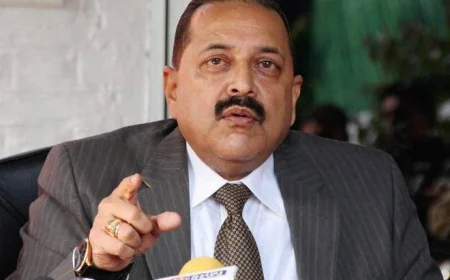
India’s science, technology and innovation landscape has undergone an unprecedented transformation over the last twelve years, marked by a nearly twenty-fold expansion of the bioeconomy, a historic Moon landing near the lunar south pole, rapid growth of the space startup ecosystem, revolutionary improvements in weather forecasting and the emergence of indigenous technologies across strategic sectors, Union Minister of State (Independent Charge) for Science & Technology, Earth Sciences, and Minister of State in the Prime Minister’s Office, Personnel, Public Grievances, Pensions, Atomic Energy and Space, Dr Jitendra Singh, said yesterday.

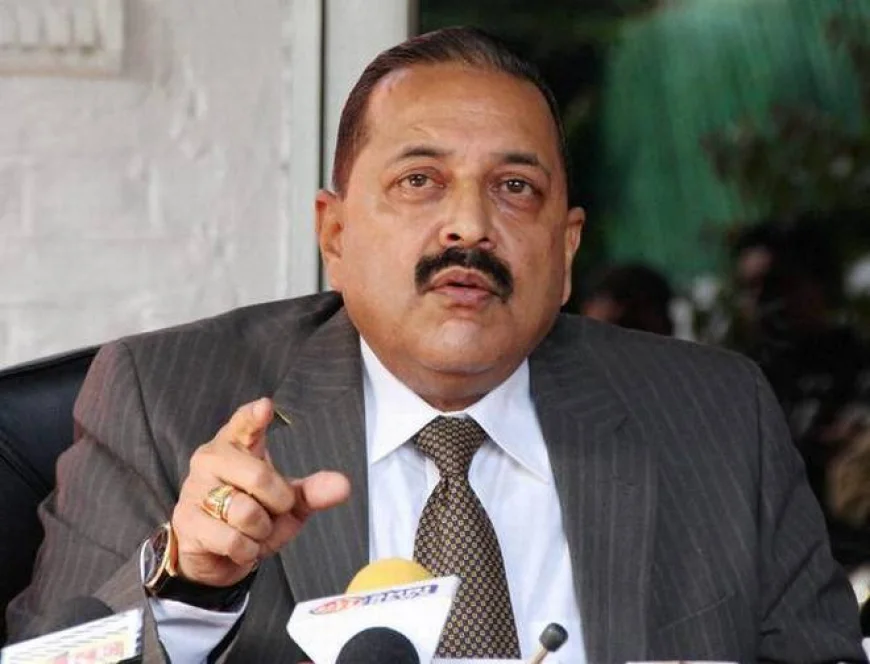
India’s science, technology and innovation landscape has undergone an unprecedented transformation over the last twelve years, marked by a nearly twenty-fold expansion of the bioeconomy, a historic Moon landing near the lunar south pole, rapid growth of the space startup ecosystem, revolutionary improvements in weather forecasting and the emergence of indigenous technologies across strategic sectors, Union Minister of State (Independent Charge) for Science & Technology, Earth Sciences, and Minister of State in the Prime Minister’s Office, Personnel, Public Grievances, Pensions, Atomic Energy and Space, Dr Jitendra Singh, said yesterday.
Addressing a press conference on “12 Years of Transformative Growth in Science, Technology and Innovation” at the SSB Auditorium, CSIR Headquarters, New Delhi, Dr Jitendra Singh said science and technology have moved from laboratories to the lives of ordinary citizens and have become a central pillar of India’s development journey under the leadership of Prime Minister Narendra Modi. He said the growing public interest in scientific achievements itself reflects the transformation that has taken place during the last decade.
The press conference was attended by Dr N. Kalaiselvi, Director General, CSIR and Secretary, DSIR & Ministry of Earth Sciences; Dr Rajesh Gokhale, Secretary, Department of Biotechnology; senior officials from the Department of Science & Technology, Department of Biotechnology, CSIR and Ministry of Earth Sciences; and members of the media.
Dr Jitendra Singh said that today almost every major flagship programme of the Government is powered by technologies emerging from India’s science and technology ecosystem, reflecting the success of an integrated, whole-of-government approach. He said the government’s emphasis on innovation, global competitiveness, industry participation and private-sector engagement has accelerated scientific outcomes across sectors ranging from healthcare and agriculture to space, weather sciences, infrastructure and energy.
Highlighting India’s biotechnology revolution, the Minister said the country’s bioeconomy has grown from nearly 10 billion US dollars in 2014 to over 190 billion US dollars today, with a target of reaching 300 billion US dollars by 2030. He said India has emerged as a global biotechnology hub through indigenous innovations in healthcare, genomics, diagnostics and biopharmaceuticals, supported by progressive policies such as the BioE3 framework.
Dr Jitendra Singh said India has also strengthened its position in advanced healthcare technologies through breakthroughs in areas such as next-generation antibiotics, affordable CAR-T cell therapy, genomics and precision medicine. He noted that the country is increasingly developing solutions not only for domestic health challenges but also for diseases and disorders of global significance.
Referring to the transformation of CSIR, the Minister said scientific institutions are now more closely connected with industry, startups, farmers and local communities than ever before. He highlighted the success of programmes such as the Aroma Mission, which has created new livelihood opportunities and helped thousands of farmers, particularly in Himalayan regions, participate in high-value agriculture. He added that several CSIR-developed technologies are now being deployed at scale in sectors including infrastructure, clean energy, healthcare and manufacturing.
The Minister cited the example of steel slag road technology, which has converted industrial waste into a valuable national resource. He said roads built using the technology have demonstrated superior durability, lower maintenance costs and greater cost-effectiveness, leading to wider adoption across the country. Such examples, he said, demonstrate how science is contributing directly to economic growth and sustainable development.
On weather and climate services, Dr Jitendra Singh described the transformation of the India Meteorological Department as one of the most significant achievements of the last twelve years. He noted that India had only 17 weather radars in 2014, compared to nearly 50 operational radars today, with another 50 planned under Mission Mausam. He said the country has also expanded lightning detection systems, forecasting networks and rain-monitoring infrastructure on an unprecedented scale.
The Minister said weather forecasting coverage has expanded from around 300 cities to nearly 1,700 locations, while modern services such as Nowcast are providing highly localised short-term forecasts that are helping citizens, farmers and disaster-management agencies make informed decisions. He said these improvements have significantly enhanced India’s disaster preparedness and resilience.
Highlighting the achievements of India’s space sector, Dr Jitendra Singh said reforms introduced over the last few years have fundamentally changed the country’s space ecosystem. He noted that the number of space startups has grown from single digits to several hundred, while the sector has emerged as a major driver of innovation and economic growth.