


Rahul Kapoor Gets Additional Charge as ED (Transformation) at Railway Board

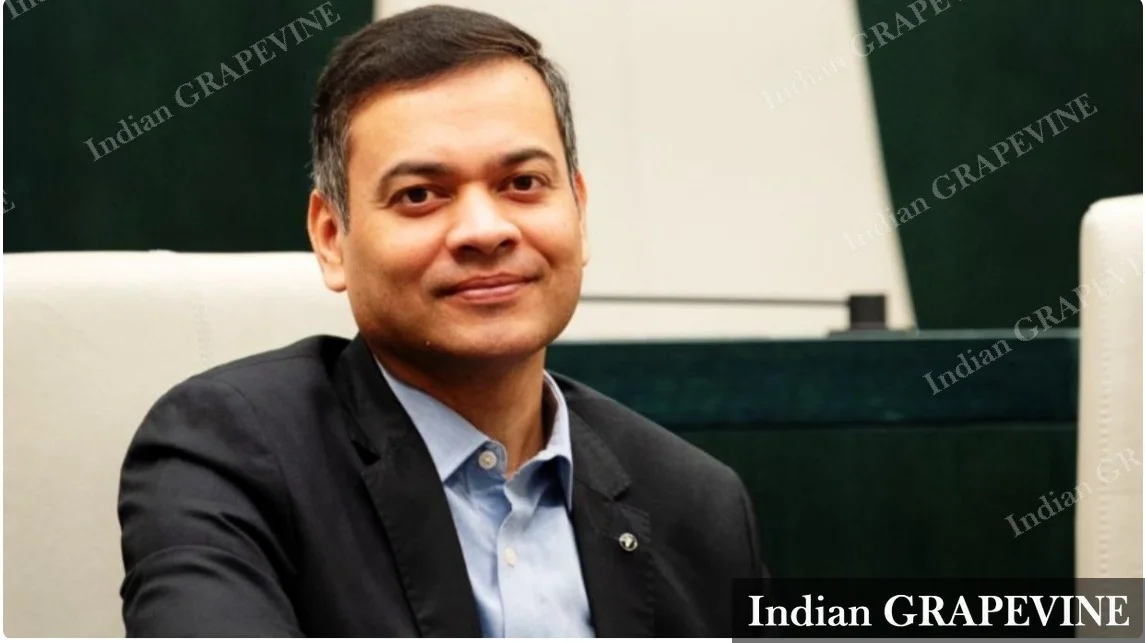
Rahul Kapoor, an Indian Railway Accounts Service officer presently serving as Executive Director/Finance (Resource Mobilisation and Public-Private Partnership) at the Railway Board, has been given the additional charge of Executive Director (Transformation) at the Board, according to an order issued this week.
The Transformation vertical at the Railway Board has taken on greater weight in recent years as Indian Railways pushes forward with technology adoption, process digitisation and organisational restructuring across its zones and production units. Handing the charge to an officer already embedded in the finance and PPP structuring side gives the Railway Board a single point of coordination between the funding mechanisms for reform projects and the Transformation vertical's own agenda, an arrangement that avoids the friction that can arise when reform planning and its financing sit with two different officers.
Kapoor returned from central deputation, where he served as Joint Secretary in the Ministry of Housing and Urban Affairs, before taking up his current position at the Railway Board. Earlier in his career he worked as Director (Finance) for Public-Private Partnership projects in the Ministry of Railways and as Director (Banking) in the Ministry of Finance, giving him exposure to both infrastructure financing and the banking sector. He has also worked on the Smart Cities Mission, where he drove data-strategy initiatives across 100 cities under the DataSmart Cities Strategy, and received the National Award for outstanding performance in the Ministry of Railways in 2016. He has additionally represented the government internationally as a panellist and speaker at forums on infrastructure financing and urban development.
In his substantive role as ED/Finance (RM&PPP), Kapoor has been responsible for structuring public-private partnership arrangements that Indian Railways depends on to raise capital without expanding its own balance sheet, from station redevelopment to freight corridor financing. That mandate has placed him at the centre of the Railway Board's efforts to diversify funding sources beyond budgetary support, at a time when the pace of network expansion has consistently outstripped what annual budgetary allocations alone can finance.
The dual charge reflects a broader trend of consolidating overlapping mandates within the Railway Board rather than immediately filling vacant posts with new appointees, a practice that has picked up as the government works through a backlog of empanelment and placement decisions across IRAS and allied services. It also signals that the Board sees the reform push and resource mobilisation as closely linked functions rather than separate silos, an approach that mirrors how PPP structuring itself already blends financial and operational planning.
The additional responsibility places Kapoor at the intersection of two of the Railway Board's more consequential agendas at a time when Indian Railways is simultaneously pursuing capacity expansion, station modernisation and a shift toward more commercially driven revenue models. How the two portfolios are eventually separated, if at all, will likely depend on the pace of reforms the Transformation vertical is expected to deliver, and on whether the Board eventually appoints a dedicated officer once the workload at either desk grows beyond what a single Executive Director can manage alongside the other.
Kapoor continues to hold his substantive post as ED/Finance (RM&PPP) alongside the new additional charge, with no indication in the order of a fixed end date for the arrangement. The order was issued out of the Railway Board's establishment section this week and takes immediate effect.