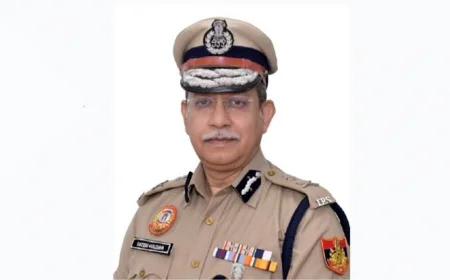



Sajid Farid Shapoo, BEML Chief Vigilance Officer, Given Additional Charge Across Four More Public Sector Units
Sajid Farid Shapoo, a 1998 batch IPS officer and current CVO of BEML, has been given the additional responsibility of Chief Vigilance Officer for GIL, TCL, AWEIL, and IOL.


Sajid Farid Shapoo, currently Chief Vigilance Officer of BEML Limited, has been assigned additional charge as CVO for four other public sector entities: GIL, TCL, AWEIL, and IOL.
Shapoo is a 1998-batch Indian Police Service officer of the Madhya Pradesh cadre, and holding vigilance charge across five organisations simultaneously, even on an additional-charge basis, reflects a staffing approach used when dedicated CVO appointments for smaller public sector units have not yet been finalised or when administrative efficiency favours consolidating vigilance oversight under one experienced officer.
Chief Vigilance Officer positions across public sector enterprises carry responsibility for oversight of procurement processes, contract awards, and internal financial controls, with the CVO's independence from an organisation's regular management structure considered essential to the role's effectiveness.
Managing vigilance oversight across five distinct organisations requires Shapoo to adapt to each entity's specific procurement patterns, operational scale, and risk profile, a considerably more demanding coordination task than a single-organisation CVO charge typically involves.
Shapoo's background as an IPS officer, rather than a financial or audit service officer, reflects the range of central services from which CVO appointments are drawn across public sector enterprises, with police service officers periodically taking on vigilance roles given their investigative and enforcement training background.
Smaller public sector units sharing a CVO with a larger organisation, as appears to be the case here with BEML as the primary charge, is a practice the Central Vigilance Commission has permitted when the smaller entities' vigilance caseload does not independently justify a dedicated full-time CVO appointment.
The additional charges were processed through the Central Vigilance Commission in coordination with the respective administrative ministries overseeing each of the five public sector entities.