


Santosh Rastogi Promoted as Additional Director General in NIA
Santosh Rastogi, a 1998-batch IPS officer of Maharashtra cadre, is promoted Additional Director General in NIA, with an approved tenure till August 5, 2027.

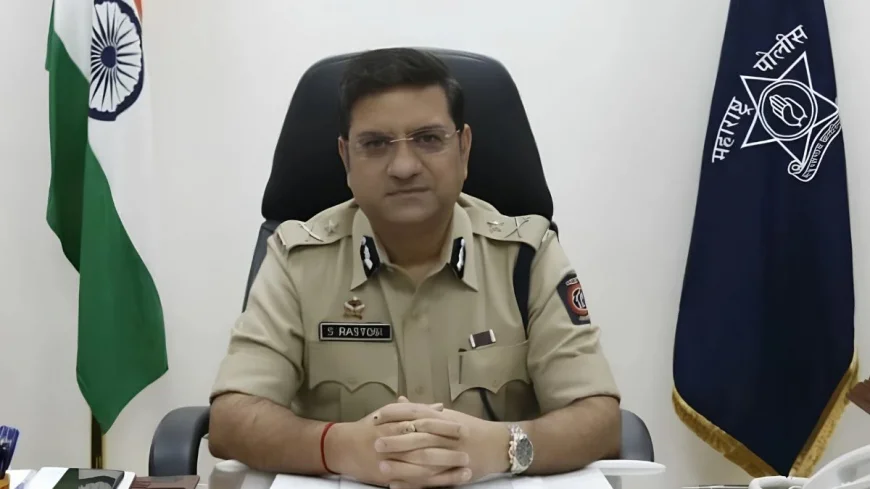
Santosh Rastogi, a 1998-batch IPS officer of the Maharashtra cadre, has been promoted as Additional Director General in the National Investigation Agency and will hold the post for his approved tenure of seven years, running until August 5, 2027, according to the order confirming his elevation.
The National Investigation Agency is India's federal counter-terrorism law enforcement body, with the legal authority to investigate offences under laws covering terrorism, insurgency-linked violence, organised crime with cross-border links and, more recently, cases referred to it under anti-terror financing statutes. Set up in the aftermath of the 2008 Mumbai terror attacks, the agency was designed to give India a central investigative body with suo motu powers to take up terrorism-related cases across state boundaries without waiting for state government consent. An Additional Director General ranks among the agency's senior-most operational officers, overseeing multiple investigation wings and coordinating with state police forces and other central agencies such as the Intelligence Bureau and the Research and Analysis Wing on cases that cut across state jurisdictions.
Rastogi moves up from the rank of Inspector General within the NIA, where he had been serving before this promotion. His elevation to Additional Director General follows the agency's internal promotion cycle, which draws its officer cadre from IPS officers on deputation from state cadres as well as from central police organisations, reflecting the NIA's structure as a composite federal force rather than a service with its own dedicated recruitment. As a 1998-batch officer of the Maharashtra cadre, Rastogi has spent close to three decades in policing, a period that has coincided with Maharashtra becoming one of the country's most complex internal security environments, spanning urban terrorism cases, organised crime networks and Naxal-affected districts in the state's eastern belt.
His approved tenure of seven years at the ADG rank is unusually long by the standards of central deputation, where assignments typically run for three to five years before an officer either seeks extension or returns to the parent cadre. A tenure of this length signals the agency's intent to retain continuity in an officer's specific portfolio, rather than rotate leadership through the standard central deputation cycle that governs most IPS assignments in Delhi. It also reflects a broader pattern within the NIA of granting fixed, extended tenures to officers handling long-running investigations, where continuity of institutional memory matters more than the standard rotation cycle applied to most central deputations.
The promotion comes as the NIA continues to expand its caseload beyond its original counter-terrorism mandate, taking up investigations into organised crime syndicates operating across state lines, cases referred under the Unlawful Activities (Prevention) Act, and matters involving overseas terror financing networks that route funds through shell companies and informal remittance channels. The agency's expanding jurisdiction has meant a corresponding increase in the number of senior supervisory positions, of which the Additional Director General rank is among the most senior below the Director General.
An ADG-rank posting within the NIA carries direct oversight of ongoing investigations, coordination with prosecuting agencies including the National Investigation Agency's own special courts, and representation of the agency in inter-ministerial security coordination meetings. The role also involves working closely with state police forces on cases that begin as local investigations before being handed over to the NIA under central government notification, a process that requires careful coordination to avoid duplication of evidentiary work already done at the state level.
Rastogi's promotion order was issued by the Ministry of Home Affairs, under whose administrative control the NIA functions, with his seven-year tenure set to conclude on August 5, 2027, after which his continuation at the agency or return to the Maharashtra cadre will depend on a fresh empanelment decision.