










DVC and NLC India Renew MoU for 20 LMT Coal Supply from Talabira to Strengthen Power Generation
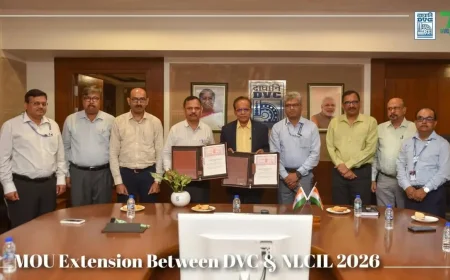
Damodar Valley Corporation and NLC India Limited have renewed their coal supply agreement for 20 lakh metric tonnes from the Talabira coal block, aimed at strengthening fuel security and ensuring stable thermal power generation across DVC's plants.

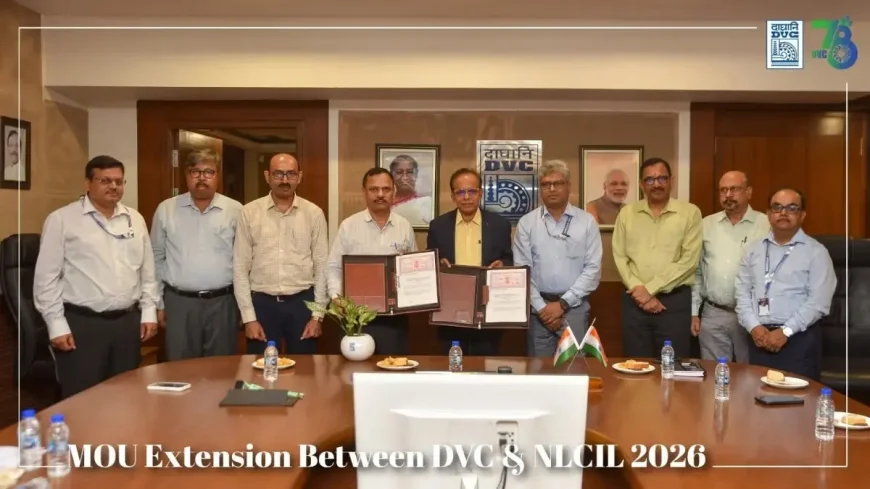
Kolkata: Damodar Valley Corporation and NLC India Limited have extended their Memorandum of Understanding for the continued supply of coal from the Talabira coal block, in a move aimed at reinforcing fuel security for DVC's thermal power generation operations. Under the renewed arrangement, NLC India will supply 20 lakh metric tonnes of coal to DVC, ensuring a steady fuel pipeline for the corporation's power plants at a time when consistent coal availability remains critical to maintaining generation reliability across India's eastern power grid. The Talabira coal block, operated by NLC India, has emerged as an important fuel source for power utilities in the eastern region, and the renewed pact builds on an existing supply relationship between the two public sector entities. For DVC, which operates multiple thermal power stations supplying electricity to West Bengal, Jharkhand, Bihar and Odisha, a dependable coal supply chain is essential to sustaining plant load factors and meeting regional power demand, particularly during peak summer and monsoon-driven supply fluctuations. For NLC India, the extension reinforces its role as a key coal supplier to power generating companies beyond its own captive thermal plants, expanding the commercial reach of its mining operations at Talabira. The agreement reflects a broader pattern of inter-PSU cooperation in India's energy sector, where coal-producing entities and power generation utilities enter into long-term supply arrangements to insulate operations from market volatility and logistical disruptions. Officials from both organisations signed the renewed MoU as part of efforts to formalise fuel-supply commitments and provide planning certainty for both parties. The development comes against the backdrop of India's continuing efforts to balance its thermal generation capacity with a growing renewable energy portfolio, with coal-based power still forming the backbone of grid stability in several states. Strengthening linkages such as the DVC-NLC India coal supply arrangement is seen as part of a wider strategy to ensure that thermal capacity remains adequately fuelled even as the energy mix gradually diversifies. The renewed agreement is expected to support uninterrupted operations at DVC's coal-based plants over the coming period, while also providing NLC India with a stable offtake commitment for coal extracted from the Talabira block, reinforcing the operational and commercial ties between the two public sector undertakings in the power and mining value chain. The Talabira coal block has gained prominence in recent years as one of the more productive mining assets under NLC India's portfolio, and the corporation has been actively pursuing similar supply tie-ups with state power utilities and central generating companies to maximise offtake from the mine. For DVC, which has been working to stabilise its fuel inventory levels amid periodic disruptions in rail-based coal logistics, a dedicated and renewed supply commitment from Talabira offers an added layer of operational predictability. Power sector observers note that such bilateral coal-linkage arrangements between PSUs are increasingly being used to supplement supplies from Coal India subsidiaries, particularly for utilities located closer to alternative coalfields in the eastern belt. The extension of the DVC-NLC India MoU is therefore being viewed not merely as a routine renewal but as part of a broader trend of public sector entities deepening collaborative arrangements to enhance fuel security, optimise logistics costs, and ensure that India's thermal generation capacity — which continues to anchor grid stability — remains adequately and reliably fuelled even as the country accelerates its transition towards a more diversified energy mix.